Product change
- Drain and recover product
- Flush, purge or strip the contact path
- Clean hopper, pump, valves, hoses and nozzles
- Inspect seals and wear parts
- Load, prime and verify the next product
Design the product path and format adjustments around the production schedule so cleaning does not become the hidden line bottleneck.
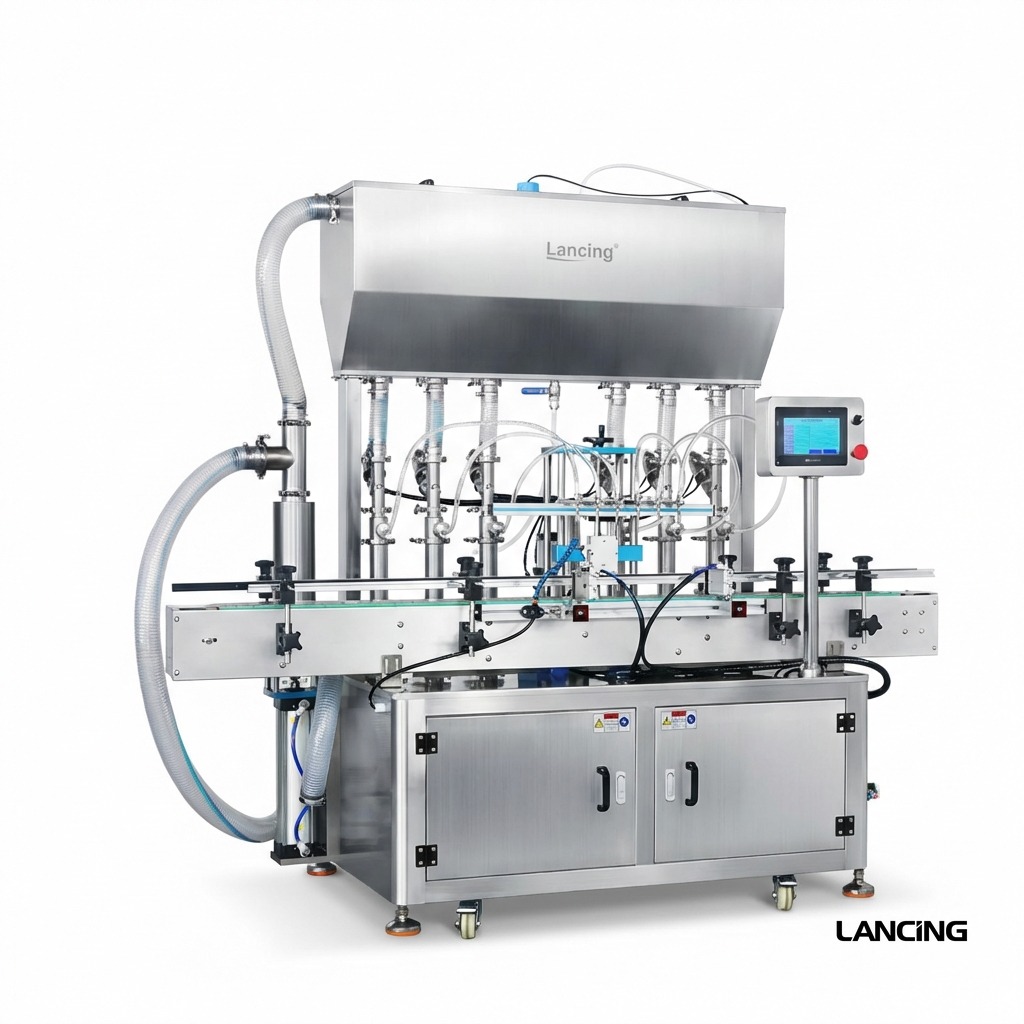
The tasks overlap, but each has different risks and opportunities for parallel working.
The machine should be designed around the required method, not adapted after delivery.
Suitable where an approved flush medium can remove the product and the product path drains effectively.
Contact parts are removed for manual cleaning, inspection and controlled reassembly.
A defined circulation, velocity, temperature and drainage sequence cleans an engineered closed path.
Separate hoses, cylinders, pumps or manifolds can reduce cross-contamination and line downtime.
Review the complete path from bulk supply to nozzle.
Recipes help, but physical settings and parts still need identification and confirmation.
Observe the current process and divide work into safe parallel tasks.
Account for remaining product and containers, not only tool time.
Measure drain, flush, strip, wash, dry and reassembly.
Change guides, nozzles, caps, labels and recipes.
Include first-off production, adjustment, checks and quality release.
Answers are general guidance. Final suitability depends on product trials, containers and the confirmed machine specification.
It is the controlled process of clearing the previous product, cleaning or replacing contact parts, adjusting the machine, selecting the next recipe and verifying the new production setup.
Some product paths can be designed for CIP or controlled flushing, but suitability depends on the pump, valves, seals, nozzles, drainage and validated cleaning requirement.
Reduce dead volume, use tool-less change parts, store recipes, mark guide positions, dedicate contact parts where sensible and document a parallel work sequence.
They can reduce downtime and cross-contamination risk for incompatible or allergenic products, but storage, identification and cost should be considered.
Compare the next most relevant machine routes before you choose a final specification.
Automatic paste filling machines for sauces, creams, gels, honey, adhesives and viscous products, with piston, servo and pump-fed options from Lancing Ltd.
View optionsAutomatic filling machines for contract packers handling frequent product, container and label changes, with flexible recipes, cleaning and line-integration advice.
View optionsA practical automatic filling machine buyer guide covering product, container, output, accuracy, cleaning, trials, integration and quotation checks.
View optionsA practical specification identifies the clean state, retained-product risks, manual tasks, verification and the production time lost to each type of change.
“Easy to clean” is not an acceptance criterion. The production team should define the end state required before the next product, batch or allergen class can run. That may involve visible cleanliness, a documented rinse, a dry inspection, swab or other quality-system check. The machine specification should identify which product-contact parts remain in place, which are removed and which areas are outside the automated or manual cleaning boundary.
Cleaning-in-place is only appropriate when the product path, flow velocity, drainage, seals, dead spaces, cleaning chemistry and verification method support it. A system described as CIP-ready may still need manual removal of nozzles, hoses, filters or valves. Where strip-down is the better route, safe access, part identification, lifting, storage and correct reassembly become part of the changeover design.
Product recovery should be planned before cleaning begins. Drain points, pigging, blow-down, pump-out or controlled manual recovery may reduce waste in some applications, but each method must be compatible with the product and safety requirements. The recovered product route and the point at which recovered material is no longer suitable for production should be agreed by the user.
Container changeover and product changeover should be timed separately. A guide-rail and nozzle-height adjustment may be quick while product recovery, cleaning and quality release take much longer. Combining both into one vague changeover figure hides the real production loss.
| Risk area | Question to resolve | Design evidence | Acceptance check |
|---|---|---|---|
| Retained product | Where can product remain in tanks, hoses, manifolds, cylinders, pumps, valves and nozzles? | Product-contact drawing, drain points and recovery method | Observe end-of-batch recovery and inspect agreed retained-product locations |
| Cross-contamination | What clean state is required before the next product or allergen class? | Cleaning sequence, chemistry, contact time and verification boundary | Complete the agreed clean and record the release checks |
| Part removal and reassembly | Can parts be accessed, handled and returned without error or damage? | Tool list, lifting/handling method, part identification and seals | Operator performs the task and passes line-clearance/first-off checks |
| CIP or flush coverage | Does cleaning solution reach, wet and drain from every intended product-contact area? | Flow path, valves, return, drainage and manual exceptions | Demonstrate the cycle and inspect or verify the identified worst points |
| Container format change | Which guides, nozzles, sensors and recipes change between packs? | Change-parts list, settings and approved format record | Run the change and produce accepted first-off containers |
| Safety and waste | How are chemicals, pressure, heat, recovered product and effluent controlled? | Risk controls, isolation, drainage and waste route | Challenge safe isolation and confirm operator instructions at site |
Useful where product-contact parts can be removed safely and inspected directly. The design should minimise tools, trapped product and reassembly error.
Useful where a compatible fluid can displace or clean the product path. Flow, drainability and the handling of the mixed product/cleaning fluid must be defined.
Requires a designed circuit, controlled cycle, drainage and an agreed verification method. Manual exceptions should be listed rather than hidden by the CIP label.
Include the required clean state, product sequence and verification method in the machinery brief.
Cleaning boundaries and timing are meaningful only when the required end state is defined.
No. The specification must identify the exact CIP circuit and any manually cleaned tanks, hoses, nozzles, valves, filters or external surfaces. Coverage, drainage and verification should be demonstrated.
Define the starting and finishing states, product and container formats, operator skill, tools, parts, cleaning release and first accepted pack. Record product change and container change separately where they have different tasks.
A clean machine can still be incorrectly assembled, on the wrong recipe or fitted with the wrong product-path part. Treat the first verified fill after cleaning or maintenance as part of the changeover process.
| Changeover control | Evidence | Related guidance |
|---|---|---|
| Part identity | Approved hose/tube, seals, nozzle, valve, pump/tooling and format parts are correctly identified and installed. | Maintenance and spare-parts planning |
| Product-path condition | No unintended residue, damage, trapped cleaning medium, leakage or air path remains. | Fault patterns and evidence |
| Format and recipe | Container guides, sensors, indexing, nozzles and recipe match the released product/pack combination. | Container handling guide |
| First-off verification | Prime, sample and measure using the authorised method before releasing normal production. | Trial and sample method |
| Site services and waste | Cleaning supply, drainage, extraction, recovery and disposal routes remain available and controlled. | Site-preparation checklist |
A replaceable tube can simplify some product-contact changes, but it becomes a metering component. Record the approved tube specification, installed routing, compression, prime method and replacement trigger, then verify the first-off dose after replacement. See the peristaltic filling guide.
Provide the product family, required segregation, recovery method, change frequency, parts to be removed and available cleaning infrastructure. Lancing can compare product-path designs and trial the difficult changeover.
| Decision | Questions to answer | Supporting guide |
|---|---|---|
| Product-contact boundary | Which vessels, hoses, pumps, valves, manifolds and nozzles are included? | Hygienic filling and CIP |
| Cleaning method | Which parts are stripped, cleaned out of place, cleaned in place or replaced? | Compare cleaning methods |
| Safe access | How are motion, pressure, heat and hazardous product isolated before cleaning? | Filling-machine risk assessment |
| Release to production | What inspection, test, record and first-off check are required? | Acceptance and commissioning |
A cleaning claim is useful only when the sequence, coverage, safe state and acceptance method are defined. Send those requirements before machine construction so access, drainage and connections can be designed rather than added later.
Specify output for each product and container combination, then account for cleaning, adjustments and replenishment. The fastest filling cycle alone does not describe a mixed-product shift. Compare the time needed to produce accepted filled containers across your actual batch pattern, including planned format changes.
Related guidance: Volumetric fillers · Powder and granule fillers
Send the product, pack and output details that matter. We’ll compare the most practical dosing and line options for you.