Filling machine FAT, SAT and commissioning criteria that can be observed and signed off
Acceptance works when every requirement has a test condition, method, evidence and owner. It should cover normal production, difficult formats, stops, recovery and line interfaces.
- Defined test conditions
- Observable acceptance
- Controlled deviations
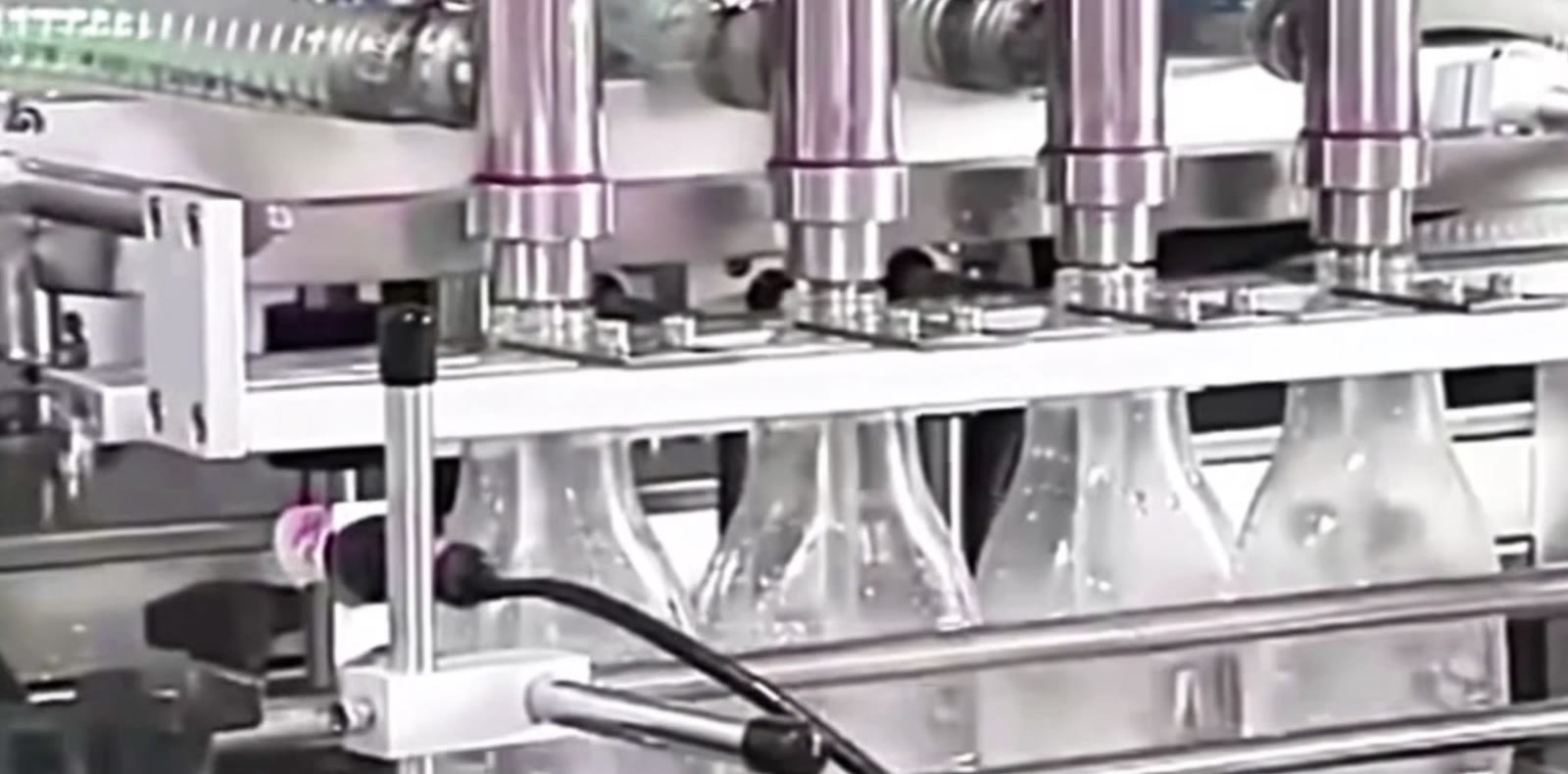
Trial, FAT, SAT and production handover answer different questions
Combining all evidence into one vague “test” creates gaps. A product trial closes application uncertainty; FAT checks the built scope; SAT checks the installed system; handover confirms operators can run and recover it.
| Evidence stage | Primary purpose | Typical boundaries |
|---|---|---|
| Application trial | Determine whether a dosing, nozzle or handling approach is suitable for the difficult product/pack conditions. | May use development equipment and focuses on the named application risk rather than full machine completion. |
| Factory acceptance test | Demonstrate the agreed machine and software scope before dispatch under documented factory conditions. | Site services and connected production equipment may be simulated; limitations must be declared. |
| Site acceptance test | Confirm installation, utilities, safety, interfaces and agreed product/pack operation at the customer site. | Dependent on site readiness, production materials and connected machines being available. |
| Commissioning and training | Set up production formats, confirm recovery and transfer knowledge to operators and maintainers. | Does not replace the customer’s site-specific procedures, risk controls or production validation. |
| Production handover | Confirm the agreed release criteria and ownership of remaining actions. | Requires controlled deviations, documentation status and an authorised sign-off route. |
Filling machine FAT matrix
The exact protocol must match the purchase specification. Each line should identify the required material, test method, result format and decision authority.
| FAT area | Example checks | Evidence |
|---|---|---|
| Configuration | Machine identity, included heads, product-contact parts, change parts, sensors, guards, controls and documentation. | Inspection record, drawings, parts list and photographs. |
| Safety functions | Guard interlocks, emergency stops, controlled stop states, reset behaviour and access for normal tasks. | Test record linked to the supplier’s risk-assessment and validation process. |
| Product path | Connections, valves, hoses/tubes, seals, nozzles, drainage, retained product and access. | Configuration record and product/cleaning observation. |
| Normal automatic cycle | Infeed, detection, indexing/tracking, filling, release and outfeed under stated conditions. | Cycle evidence, counters, observations and agreed sampling. |
| Dose performance | Each head at agreed doses using the defined product/substitute, instrument and sampling method. | Raw measurements, calculation method, settings and result summary. |
| Disturbances | Missing container, product low, downstream block, pause/restart, rejected fill and fault reset. | Expected versus observed state and operator action. |
| Recipes/changeover | User permissions, recipe selection, change parts, settings, first-off check and incorrect-format prevention. | Completed changeover checklist and first-off evidence. |
| Documentation/training readiness | Manuals, drawings, declarations/certificates within scope, software backup, spares and training plan. | Controlled document register and open-action list. |
Define permitted interventions
A test result is difficult to interpret when settings are adjusted continuously without record. Agree which adjustments are allowed during set-up, when the formal sample begins, what constitutes a reset and whether any fault or operator intervention restarts the run.
SAT and commissioning matrix
SAT should focus on site-dependent functions that could not be fully proven at the factory, while confirming that transport and installation have not changed the accepted machine state.
| SAT/commissioning area | Site checks | Release question |
|---|---|---|
| Installation | Position, levelling, access, guarding, utilities, extraction/drainage and safe isolation. | Is the equipment installed in the agreed environment and ready for controlled operation? |
| Product feed | Tank/IBC/hopper interface, pressure/level behaviour, refill, recirculation and starvation response. | Does the filler receive product in the condition assumed by the design? |
| Line interfaces | Upstream/downstream permissions, speed ownership, blockage, accumulation, coding, inspection and reject. | Does the complete line stop and recover without losing pack state or creating unsafe/poor-quality output? |
| Production formats | Agreed products, doses, containers, closures and recipes. | Are the released formats reproducible using controlled settings and identified parts? |
| Cleaning/changeover | Product recovery, strip/flush, reassembly, format change and first-off release. | Can trained personnel perform the agreed sequence safely and consistently? |
| Training | Normal operation, replenishment, faults, recovery, cleaning, changeover and maintenance boundaries. | Can authorised personnel demonstrate the tasks and identify when escalation is required? |
| Handover | Open actions, deviations, documents, backups, spares, maintenance and support contacts. | Is the accepted scope clear, with remaining actions controlled and owned? |
Turn the specification into an acceptance protocol
Send the machine scope, production formats, interfaces and quality measures. Lancing can structure trial, FAT and SAT evidence around the functions that genuinely need to be demonstrated.
Filling machine FAT, SAT and commissioning FAQs
What is the difference between FAT and SAT for a filling machine?
FAT is normally performed before dispatch to demonstrate the agreed machine scope under defined factory conditions. SAT is performed after installation to confirm site utilities, interfaces, safety functions, products and packs under agreed site conditions.
Should FAT use the production product and containers?
Use representative product and packs whenever the unresolved risks depend on them. A substitute can test general functions but should not be treated as evidence for product-specific foam, viscosity, particles, compatibility, cleaning or pack handling.
Who should write the acceptance criteria?
The customer and supplier should agree them together before the test. Criteria need a defined method, conditions, sample size, reference instrument, permitted interventions and responsibility for closing any deviation.
What happens when an FAT point cannot be completed?
Record the reason, evidence available, temporary status, owner, due date and whether it must be closed before dispatch or transferred to SAT. An unrecorded verbal agreement is not a controlled acceptance decision.
Is commissioning complete when the machine runs automatically?
Not necessarily. Commissioning should also confirm safe operation, utilities, interfaces, product feed, recipes, changeover, cleaning, fault recovery, training, documentation and the agreed production handover criteria.
Include inspection failure and uncertain-pack handling in acceptance
Agree a controlled way to introduce identified test packs and observe their final disposition. A weight display changing to reject is not the same as a demonstrated rejection. Record what the line does when confirmation is absent, the reject route is unavailable or a stop occurs with a pack between inspection and the reject device.
Treat these as witnessed project tests, not as a direction to defeat guards or create hazardous faults. Use the responsible engineering team to define safe simulation and isolation. Verify restart authority and reconciliation of every test pack before ordinary production resumes.
The feedback and reject matrix explains the functional boundaries. For pouch systems, add the representative pouch-trial conditions so opening, dosing and final closure are accepted together. Send your draft acceptance requirements.