 Play when you’re ready
Automatic auger filling machine
Automatic dosing of powders and other dry products using an auger filling route.
Watch on YouTubeView direct machinery footage and privacy-enhanced links to Lancing UK demonstrations covering automatic filling and compact production lines.
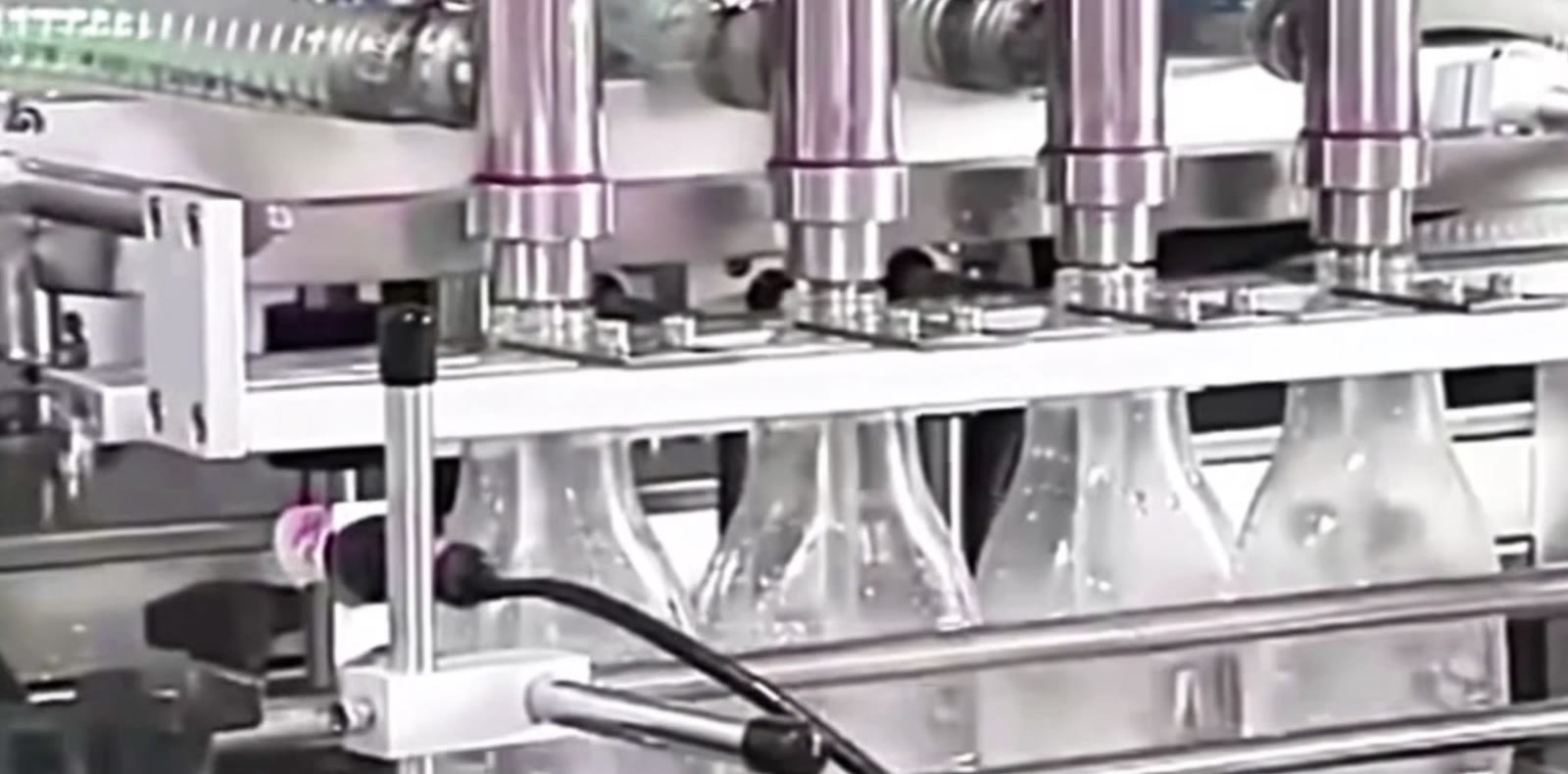
See how containers are controlled through filling and transfer, then discuss the nozzle count, guarding and conveyor layout your own line needs.
Choose the demonstration closest to your product or line requirement. YouTube opens only when you press play.
Automatic dosing of powders and other dry products using an auger filling route.
Watch on YouTubeSee bottles pass beneath the filling heads in a clear automatic sequence, then compare the head count, conveyor format and controls needed for your product.
Discuss a similar filling lineA twin-head automatic format for larger liquid fills and production-line integration.
Watch on YouTubeA quick overview of the factors that affect an automatic chemical filling project.
Watch on YouTubeClear evidence can narrow the initial machine route before samples are sent.
Show pouring, pumping, stringing, settling or particles at production temperature.
Show the pack, opening, stability, cap and current handling problem.
Record the existing fill and the specific speed, drip or quality limitation.
State the fill quantity, target output, temperature and cleaning method.
Answers are general guidance. Final suitability depends on product trials, containers and the confirmed machine specification.
No. Demonstrations show machine format and operation. Final output depends on the actual product, fill volume, container, closure and complete line.
Yes. A short video showing flow, foam, stringing or particles can help the initial review, although a physical sample may still be needed.
YouTube demonstrations load only after you press play, helping to limit unnecessary third-party connections.
Compare the next most relevant machine routes before you choose a final specification.
Compare automatic filling machines for liquids, pastes, powders and complete bottling lines, with product-led specification support from Lancing Ltd in the UK.
View optionsA practical automatic filling machine buyer guide covering product, container, output, accuracy, cleaning, trials, integration and quotation checks.
View optionsRequest an automatic filling machine quotation from Lancing Ltd. Send product, container, fill range, output and line-integration details.
View optionsThe silent demonstration shows container presentation beneath a bank of filling heads. Use the timeline to identify what is visible, then separate observation from the product and performance evidence still required.
The automatic filling-head bank and a grouped set of clear containers are visible. Review the available nozzle positions, bottle pitch and the guarded working area.
The bottles are presented under the filling area with side guides controlling their path. Review alignment, opening access and how the container group is held in relation to the heads.
The final view shows the head bank, bottle group and transfer zone more closely. Review guide clearance, the route out of the filling station and access around the product-contact area.
| Review point | What the video can show | What still needs evidence | Useful next input |
|---|---|---|---|
| Machine format | Head-bank arrangement, conveyor direction, guards and general station layout | Final dimensions, product-contact parts and purchased scope | Layout drawing and confirmed machine specification |
| Container handling | Visible bottle pitch, guide position and presentation beneath the heads | Performance across the complete tolerance range and during gaps or stops | Smallest, largest and least stable container samples |
| Dosing behaviour | Nozzle arrangement and visible movement where captured | Fill accuracy, foam, drip control, particles and product compatibility | Representative product trial with recorded individual results |
| Production output | Sequence and relative movement during the recorded demonstration | Sustained accepted packs for the customer’s fill and complete line | Agreed run protocol including refill, pause, reject and downstream states |
| Cleaning and changeover | Visible access around selected components | Removal sequence, cleaning method, recovery and release checks | Product list, cleaning requirement and observed changeover trial |
| Line integration | Physical transfer area shown in the frame | Signals, accumulation, closure, labelling, inspection and fault recovery | Interface schedule and complete bottle-journey layout |
Send the real product, containers, dose and output requirement so the visible machine format can be compared with your application evidence.
Video is valuable for reviewing pack flow, nozzle movement, access and line sequence. It cannot by itself prove dose accuracy, product compatibility, sustainable output, cleaning or fault recovery for another application.
| What video can show | What it cannot confirm alone | Next evidence |
|---|---|---|
| Container pitch, indexing and general stability | Tolerance across the full production pack family and response to jams or missing packs. | Container-handling trial |
| Nozzle movement and visible cut-off | Measured dose, hidden air, seal condition or performance with another product. | Nozzle and product-path test |
| Machine arrangement and operator access | Actual site fit, open guard doors, cleaning part removal and utility routes. | Dimensioned line layout |
| A stable automatic run | Cold start, refill, pause/restart, downstream block and recovery behaviour. | FAT/SAT state matrix |
| Finished containers leaving the filler | Raw measurements, sample method and closure/seal performance. | Recorded sample trial |
When recording an existing process, include the product feed, container infeed, filling heads, outfeed and the moment the problem occurs. Keep the head or container identity visible where possible, and record the product, recipe, format and production state separately. Do not record in a way that bypasses site safety rules or exposes confidential information.
Share non-confidential video or photographs with the product, pack, dose and problem description. Lancing can identify which observations need a sample trial, drawing or acceptance test.
Send the product, pack and output details that matter. We’ll compare the most practical dosing and line options for you.

