Introduce and orient
Manual loading, rotary table, unscrambler or upstream machine must deliver the correct orientation without damaging or crowding packs.
Reliable filling depends on the right container arriving in the right position at the right time, then leaving with a known fill state for the next station.
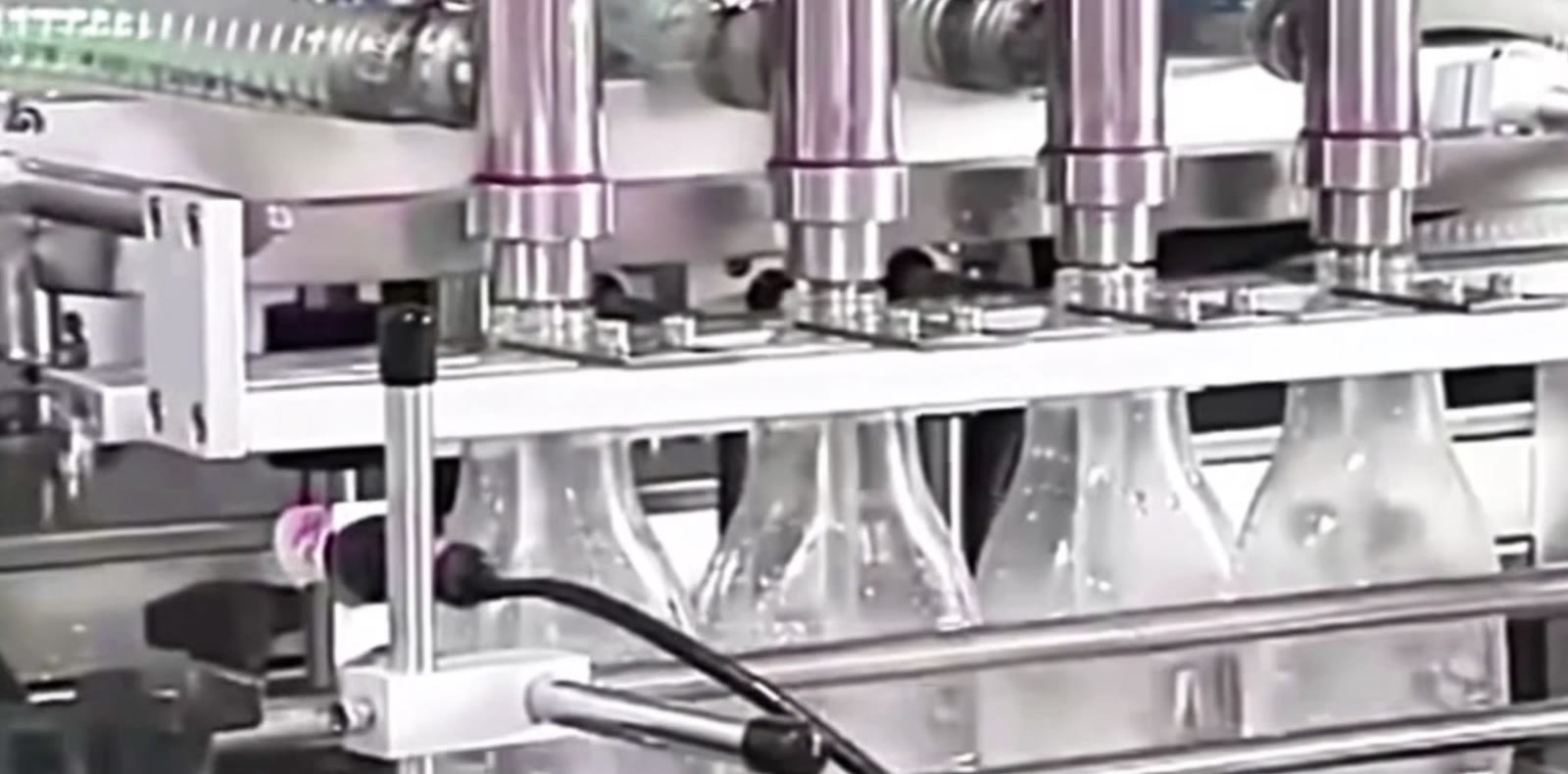
A line layout should show where packs are introduced, separated, stabilised, detected, filled, inspected, rejected, accumulated and transferred.
Manual loading, rotary table, unscrambler or upstream machine must deliver the correct orientation without damaging or crowding packs.
Gates, timing screws, starwheels, belts or servo devices create a predictable pitch for sensing and indexing.
Side guides, base support, neck control, pockets or format parts prevent tipping, rotation or deformation at critical movements.
Sensors and control logic verify the expected number and location of containers before the fill is permitted.
The system tracks whether each pack is empty, filling, complete, interrupted or rejected through a stop and restart.
Outfeed spacing and accumulation protect the pack and provide the next machine with a controlled infeed state.
Test empty and filled packs. A container that is stable after filling may be difficult to control when empty, while a flexible pack may deform under guide or accumulation pressure.
| Pack/line condition | Handling risks | Evidence to collect |
|---|---|---|
| Tall or narrow container | Tipping during acceleration, guide transitions or nozzle movement. | Empty/filled stability, base variation, centre of gravity and recovery after contact. |
| Lightweight or flexible bottle | Side-guide compression, scuffing, static, inconsistent sensor response. | Production samples across suppliers/cavities and behaviour under normal line pressure. |
| Irregular or oval pack | Rotation, variable guide contact and inconsistent label or closure orientation. | Required orientation, datum feature, dimensional drawing and acceptable presentation tolerance. |
| Small neck opening | Nozzle collision if bottle position varies. | Opening dimensions, eccentricity, indexing repeatability and safe clearance. |
| Continuous tracking fill | Motion synchronisation, entry pitch, tracking window and controlled exit. | Bottle speed, spacing, accelerations and response to line interruptions. |
| Multiple formats | Long adjustment, wrong guides, sensor misalignment and recipe mismatch. | Format matrix, change parts, labelled settings and first-off verification method. |
| Accumulation | Pack pressure, nesting, tipping, scuffing and uncontrolled release. | Maximum stable queue, release behaviour and blocked-line recovery time. |
A robust line does not merely stop safely; it knows what to do with containers that were between detection, filling and release when the interruption occurred.
| Event | Questions for the control strategy | Expected evidence |
|---|---|---|
| Missing container | Does the affected head inhibit while the rest continue, or does the group stop? | Demonstration with each relevant container position absent. |
| Double feed or jam | Where is the fault detected, how is motion stopped and how is the jam cleared safely? | Fault message, safe access method and restart sequence. |
| Interrupted fill | Is the container completed, rejected or held for operator decision? | Repeatable state handling and reconciliation of partial packs. |
| Downstream blockage | Where do filled containers accumulate and when does the filler stop? | No spills, pack damage or loss of container identity. |
| Emergency stop or power loss | What happens to valves, pumps, nozzles, product pressure and packs in flight? | Controlled safe state and documented recovery check. |
| Format change | How are guides, sensors, recipes and change parts verified before release? | Checklist and first-off approval using the intended pack. |
Send production packs, drawings, format quantities and photographs of the existing infeed/outfeed. Lancing can assess indexing, stabilisation and transfer risks alongside the filling method.
The container may arrive late, double-fed, leaning, outside the sensor window or at the wrong pitch. The fault can be in infeed, spacing, indexing, guides, sensor position or recovery logic rather than dosing.
Low mass, high centre of gravity, flexible walls, irregular base, static, surface friction and dimensional variation can all reduce stability before the bottle is filled.
That depends on bottle geometry, rigidity, finish consistency and the operations around it. Body guides are simple for stable packs; neck control may help some lightweight bottles but requires a suitable, consistent neck feature.
Enough to support the defined stop and recovery strategy without causing pack pressure or instability. The correct amount depends on line rate, station behaviour, pack durability and the time needed for predictable interventions.
Define whether the pack is completed, rejected, quarantined or manually reconciled. The control system should retain a clear container state through stop, restart and transfer.
Send the product, pack and output details that matter. We’ll compare the most practical dosing and line options for you.