Piston volumetric
Uses cylinder displacement to establish the dose and suits many liquid and viscous products.
Specify the volumetric principle around product behaviour, fill range and container handling rather than relying on a generic machine label.
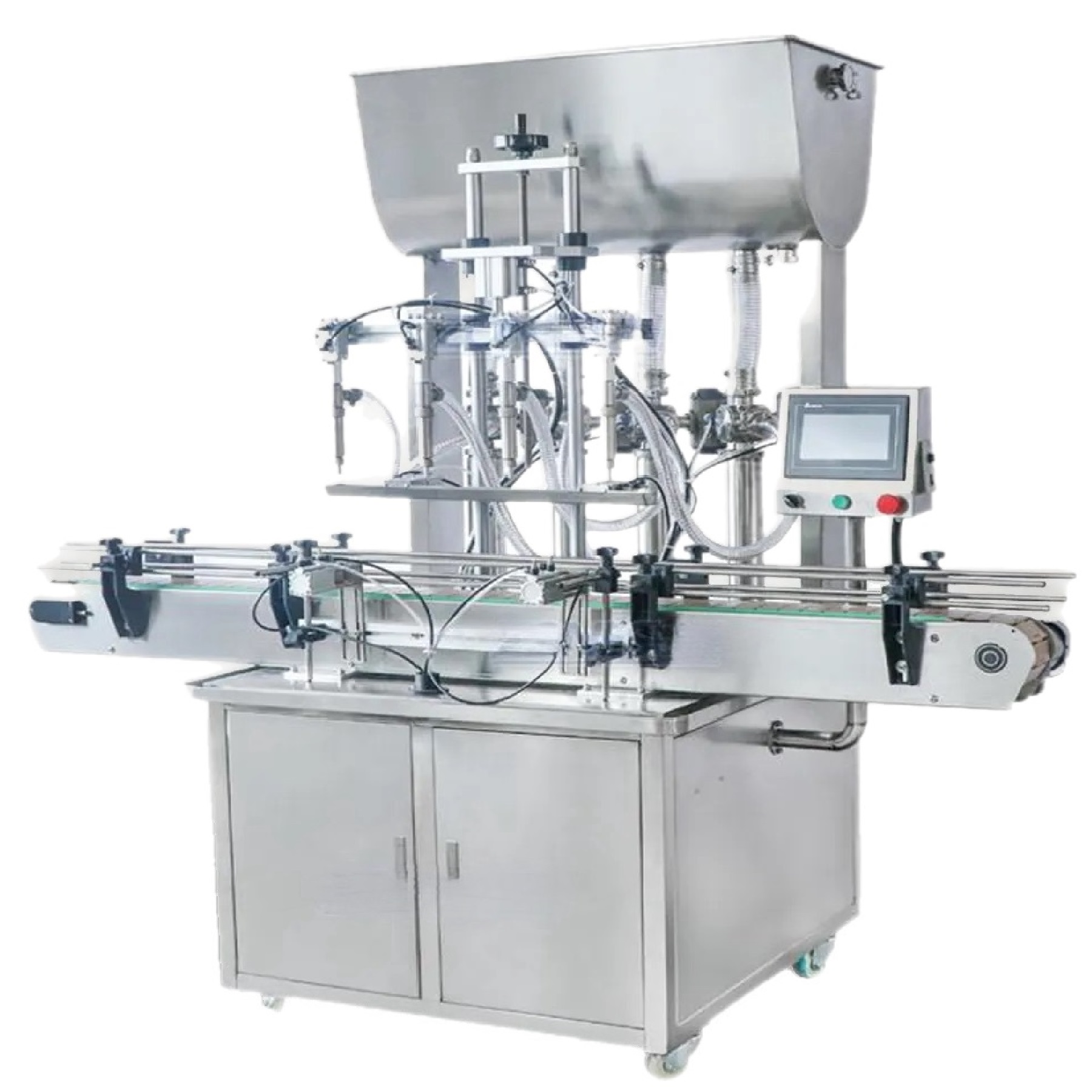
A volumetric filler places a controlled volume into each container. The measuring method may be a piston, displacement pump, timed pump, flow-controlled system or another product-specific mechanism.
For automatic production, the dosing principle must be combined with reliable container indexing, product supply and downstream line control. The fill range, product viscosity, foam, particles and cleaning method are the main filters for the shortlist.
The final route should be confirmed against representative product and containers.
Uses cylinder displacement to establish the dose and suits many liquid and viscous products.
Controls pump displacement or operating time and can suit a wide range of product paths.
Uses a suitable flowmeter to measure delivered volume, subject to product conductivity and behaviour.
Dry products may use cups or augers when bulk density and flow characteristics are controlled.
The details differ by machine, but these stages define the core control problem.
The machine stores a calibrated volume parameter for the selected product and pack.
Tank level, pressure, temperature and agitation are controlled as necessary.
The dosing system and nozzles operate in time with the conveyor.
Checks confirm actual net content, presentation and line performance.
A complete enquiry reduces avoidable assumptions and makes machine comparisons more meaningful.
| Measuring principle | Piston, pump, flowmeter, cup, auger or another validated method |
|---|---|
| Calibration | Procedure, frequency and adjustment limits |
| Product feed | Tank, hopper, pump, head pressure and level management |
| Net content | Target, tolerance and legal/metrology requirements for the application |
| Changeover | Recipe, cylinder, pump, nozzle and container-guide changes |
| Verification | Sample weighing, checkweigher or in-process quality checks |
Use these configurations to compare machine routes. Final fill range, speed and accuracy are confirmed against your product, container and line.
A conveyorised filling format that can be configured around the selected volumetric dosing route.
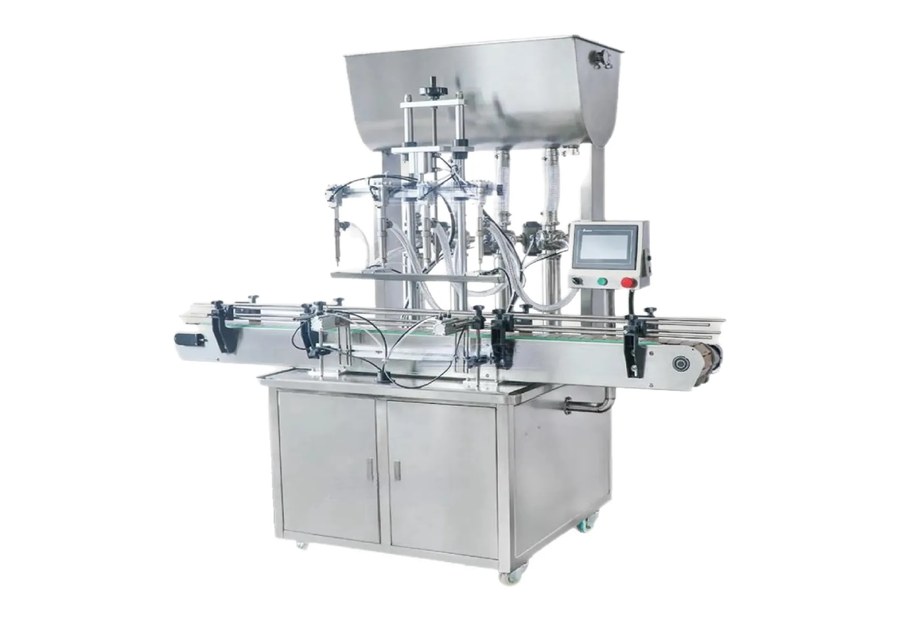
A positive-displacement option for thick products where product feed and clean cut-off are central to the design.
A filler performs best when infeed, closure, labelling and accumulation are sized around the same design rate.
Compare alternative filling methods and the equipment that may be needed before or after the filler.
Answers are general guidance. Final suitability depends on product trials, containers and the confirmed machine specification.
It is a conveyorised filler that measures a repeatable product volume for each container. The actual measuring device may be a piston, pump, flowmeter, auger or another system.
It can be, but nozzle movement and fill-speed control are important. The dosing method must also remain stable despite air entrainment and product condition.
Calibration normally compares the programmed dose with measured product in representative containers, then stores the corrected setting. The exact method depends on the machine and quality system.
Provide the product, minimum and maximum fill, container dimensions, opening size, target output, accuracy expectation, cleaning method and any capping or labelling requirements.
Compare the next most relevant machine routes before you choose a final specification.
Specify automatic liquid filling machines for free-flowing, foaming, oily and medium-viscosity products, with UK advice on dosing, nozzles and line integration.
View optionsCompare automatic piston filling machines for accurate liquid and paste dosing, including multi-head, servo and conveyorised options for UK production lines.
View optionsThe word volumetric covers several dosing mechanisms; the right comparison starts with the real measurement method and its production conditions.
Volumetric filling means that the dose is controlled by a measured volume, but that objective can be achieved through different mechanisms. Piston displacement, timed or metered pump delivery, flow measurement and volumetric cups each create different product, range, cleaning and output considerations. A quotation should name the actual measurement principle rather than relying on “volumetric” as a complete technical description.
The usable dose range is project-specific. A machine that can be adjusted to a stated value is not necessarily optimised for repeatability, cycle time or cleaning across every point between its minimum and maximum. Compare the smallest, largest and normal production doses using the correct product-contact module and the same acceptance method.
Density changes matter when a volumetric dose is checked by weight. Product temperature, aeration, settling and batch variation can change mass without a change in measured volume. The acceptance plan should state whether the production objective is declared volume, mass, fill level or another quality measure, and how the reference instrument and sample method will be controlled.
For detailed piston, pump and cup machinery, including semi-automatic formats, use Volumetric Fillers UK. This page retains the automatic-line role: multi-head control, container movement, recipes and integration with closing and labelling equipment.
| Method | Primary measurement | Product and dose considerations | Accuracy conditions | Cleaning and utilities |
|---|---|---|---|---|
| Piston displacement | Defined cylinder displacement | Liquids and pastes subject to valve, cylinder, seal and nozzle suitability | Complete cylinder filling, air exclusion, stable feed and clean cut-off | Strip-down or flush route; pneumatic or servo drive; product feed |
| Pump with timed or calibrated delivery | Pump movement over a controlled command | Suitable product depends on pump type, viscosity, solids and required range | Pump condition, calibration, supply stability and product temperature | Pump and pipework cleaning; electrical supply; transfer or balance tank |
| Flow-measured filling | Measured product flow | Requires a compatible, stable product and suitable measurement technology | Meter setup, zeroing, product properties and full pipe condition | Meter and valve cleaning; electrical/control integration; pressure conditions |
| Volumetric cup dosing | Fixed or adjustable cup volume | Free-flowing dry products where bulk density and cup filling remain consistent | Stable bulk density, level and cup fill condition | Hopper and cup access; product feed; dust and electrical controls |
| Automatic multi-head implementation | Parallel application of the selected method | Head count must be supported by common feed, packs and downstream line | Individual-head calibration and representative sustained testing | Manifold or hopper cleaning; controls, air, power and conveyor interfaces |
Ask every supplier to state the actual volumetric principle, module selection and verification method.
Clarify the measurement principle, verification method and module selection for every required dose.
A volumetric dose can remain constant while product density changes because of temperature, aeration, settling or formulation variation. Agree whether acceptance is based on volume, weight or another production measure.
Not automatically. The smallest and largest doses may need different cylinders, pumps, cups or calibration conditions. The quotation should state the module and change parts used for each required format.
A volumetric filler may use a piston, pump movement, timed gravity flow or a flowmeter signal. Those descriptions should not be treated as equivalent: each has a different product path, calibration method, minimum useful dose and response to viscosity, temperature, air and particles.
Send the product, pack and output details that matter. We’ll compare the most practical dosing and line options for you.