Unit 5A Jefferson Way, Thame, Oxfordshire, OX9 3SZ

Search machine types, applications, buyer guidance and filling-line topics.

Simple liquid flow

When is gravity filling suitable for bottles and containers?

Gravity filling uses the liquid head above the nozzle to move a free-flowing product into the container. It can be a practical route where product viscosity, supply level, bottle opening and output remain within a controllable window, but it should not be assumed suitable for every thin liquid or every container.

  • Use genuinely free-flowing product
  • Control tank level and head pressure
  • Separate dose filling from level filling
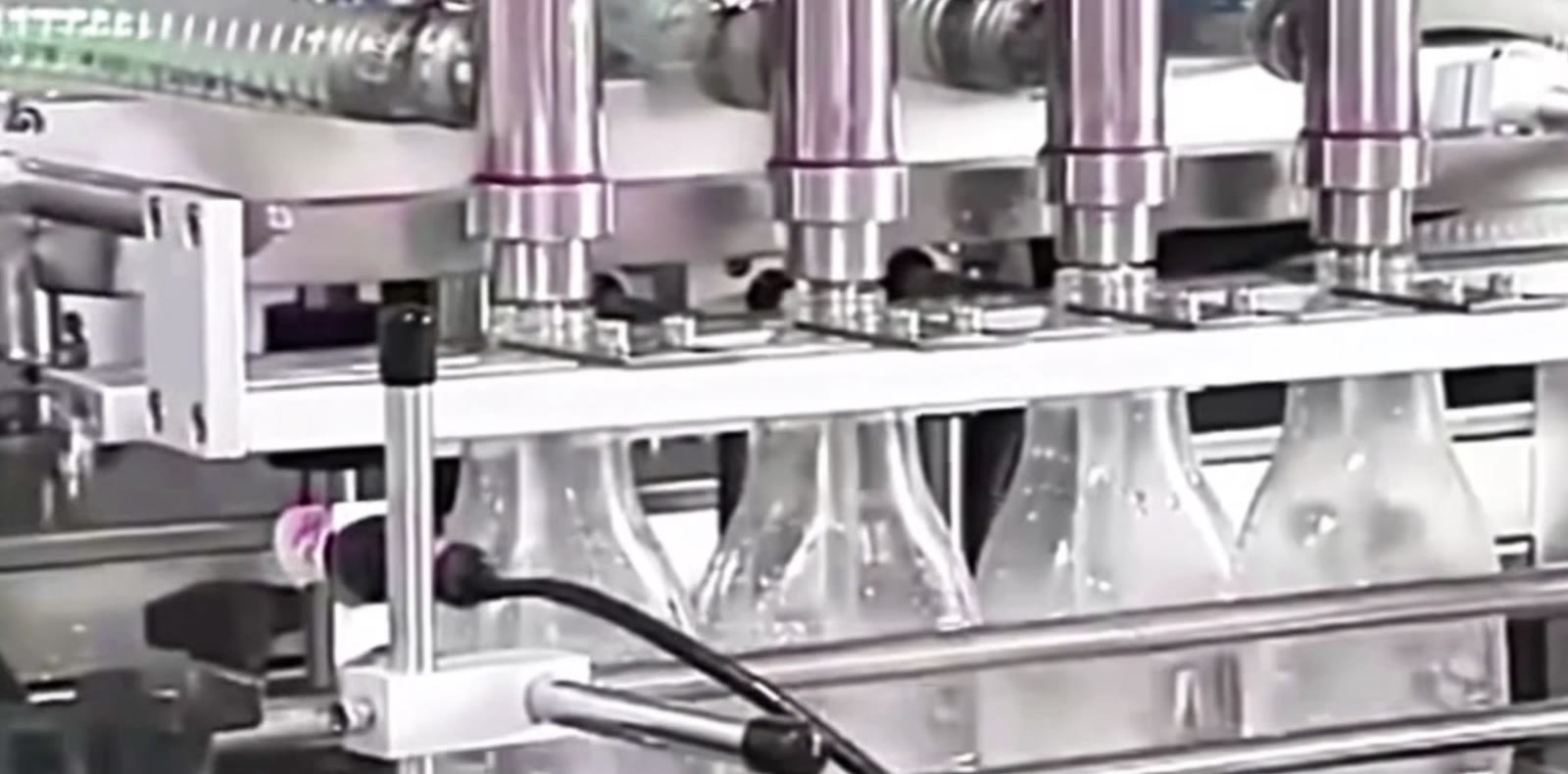
Automatic filling machine with bottles presented beneath filling nozzles
Machine selection should be verified with the real product, container and production sequence
Direct answer

Use gravity where product head produces a controllable fill

Gravity filling can be effective for selected free-flowing liquids when the product tank, liquid level, valve and bottle venting are controlled. It is not simply the cheapest route for any thin liquid: foam, temperature, density, bottle variation and quantity-control requirements still determine whether the process is practical.

Timed gravity filling aims to deliver a dose over a controlled period. Gravity level filling aims to stop at a defined level. Those are different buying tasks and should not be described as interchangeable.

Gravity routes

Separate timed dosing from level filling

RouteControlling principleImportant conditions
Timed gravity doseValve opens for a controlled period under a defined liquid head.Tank level, viscosity, temperature, nozzle bore and supply pressure must remain within the accepted window.
Gravity level fillContainer is filled to a set visual level using a level-control nozzle arrangement.Rigid bottle, neck geometry, air return and product recovery must be suitable.
Gravity with pump-fed header tankA separate pump maintains product level while gravity controls the final path.Level-control response, refill surges and overfill protection need testing.
Stable supply

Tank level is part of the dosing system

As the height of liquid above the nozzle changes, the pressure driving the fill changes. A gravity filler therefore needs a defined working level and a refill method that does not create surges, aeration or contamination. The tank, level sensor, inlet valve and nozzles should be tested together through low level, refill and steady production.

VariableEffect on productionControl approach
Viscosity changeChanges flow rate and useful cycle time.Define product temperature and allowed viscosity range.
FoamExtends fill time and can wet the bottle neck.Reduce air entry, control flow and consider nozzle movement or another route.
Bottle openingRestricts nozzle size and air escape.Use production bottles and assess venting at the fastest acceptable flow.
ParticlesCan bridge valves or settle in the tank.Confirm particle clearance, agitation and distribution.
Tank refillCan disturb level and entrain air.Test refill during a sustained run rather than only with a full tank.
Alternative routes

Know when gravity is no longer the simplest answer

Consider pump or piston dosing

When the product is too viscous, the dose range is broad, the head pressure cannot be stabilised or the fill profile needs precise acceleration and deceleration, a pump or positive-displacement route may be more controllable.

Consider vacuum or overflow level filling

When visual level in a rigid bottle is more important than a timed dose, vacuum or overflow filling may provide a more direct level-control route.

Consider flowmeter filling

When a stable liquid can be measured in motion and recipe-based volume control is useful, a flowmeter system may avoid relying on fixed gravity head for quantity.

Consider net-weight filling

When sale, process or large-pack control is based on mass, a load-cell system may give a clearer quantity basis.

Trial and acceptance

Prove the lowest tank level and hardest bottle

  • Production liquid at the coldest and warmest normal condition
  • Smallest opening and least stable bottle
  • Lowest and highest normal tank level
  • Tank refill while the machine is running
  • Pause, restart and end-of-batch behaviour
  • Independent quantity and visual-level checks
Buyer questions

Common questions about gravity filling

How does a gravity filling machine work?

A gravity filling machine holds product above the nozzles and opens a controlled product path so liquid flows into each container under gravity. The dose may be controlled by time, valve operation or a level-filling principle. Product head, viscosity, tank level, nozzle size and container venting all influence the result.

Which products are suitable for gravity filling?

Gravity filling is generally considered for free-flowing, non-carbonated liquids that can move reliably without a positive-displacement pump. Suitability still depends on foam, particles, chemical compatibility, hygiene, temperature and the required quantity control. A representative trial is needed where the product changes during production.

What is the difference between gravity and vacuum filling?

Gravity filling relies on product head to move liquid into the container, while vacuum filling uses a pressure difference and is commonly considered where a consistent visible level in rigid containers is important. The bottle neck, seal, product recovery and quantity-control method make the two routes materially different.

Why must the gravity-filler tank level be controlled?

The liquid level above the nozzle creates the pressure that drives a gravity fill. If that head changes significantly as the tank empties or refills, flow and fill time can change. A controlled tank level, suitable valve arrangement and production-state testing are therefore central to repeatable operation.

Can a gravity filler handle foaming liquids?

A gravity filler may handle selected foaming liquids when the flow rate, nozzle position, bottle venting and product feed are controlled, but gravity alone does not solve foam. If the necessary fill time or wet-neck condition becomes unacceptable, a diving nozzle, different valve route, overflow system or pump-controlled profile may be more suitable.

What information is needed for a gravity-filler quotation?

Provide the liquid, viscosity and temperature range, foam behaviour, particles, fill range, bottle opening, container material, required output, product-supply method, cleaning route and connected capping or labelling equipment. Production bottles and product are needed to confirm venting, level and shut-off behaviour.

Before quotation

Information Lancing needs to confirm the filling route

  • Production product and difficult normal condition
  • Minimum, maximum and common fill quantity
  • Container, opening, closure and format range
  • Sustained output and shift pattern
  • Product feed, cleaning and utilities
  • Upstream, downstream and acceptance requirements

Send product, pack and production evidence

Lancing can compare practical machine routes, identify what can be quoted from the available information and define where samples or a representative trial are needed.

Choose with confidence

Get a filling-machine shortlist built around your product.

Send the product, pack and output details that matter. We’ll compare the most practical dosing and line options for you.

Call an expert