Piston paste filling
Positive displacement supports repeatable dosing across many viscous products. Valve and cylinder dimensions must suit the product and fill range.
Control product feed, dose repeatability and nozzle cut-off for jars, bottles, tubs and wide-mouth containers on a conveyorised line.
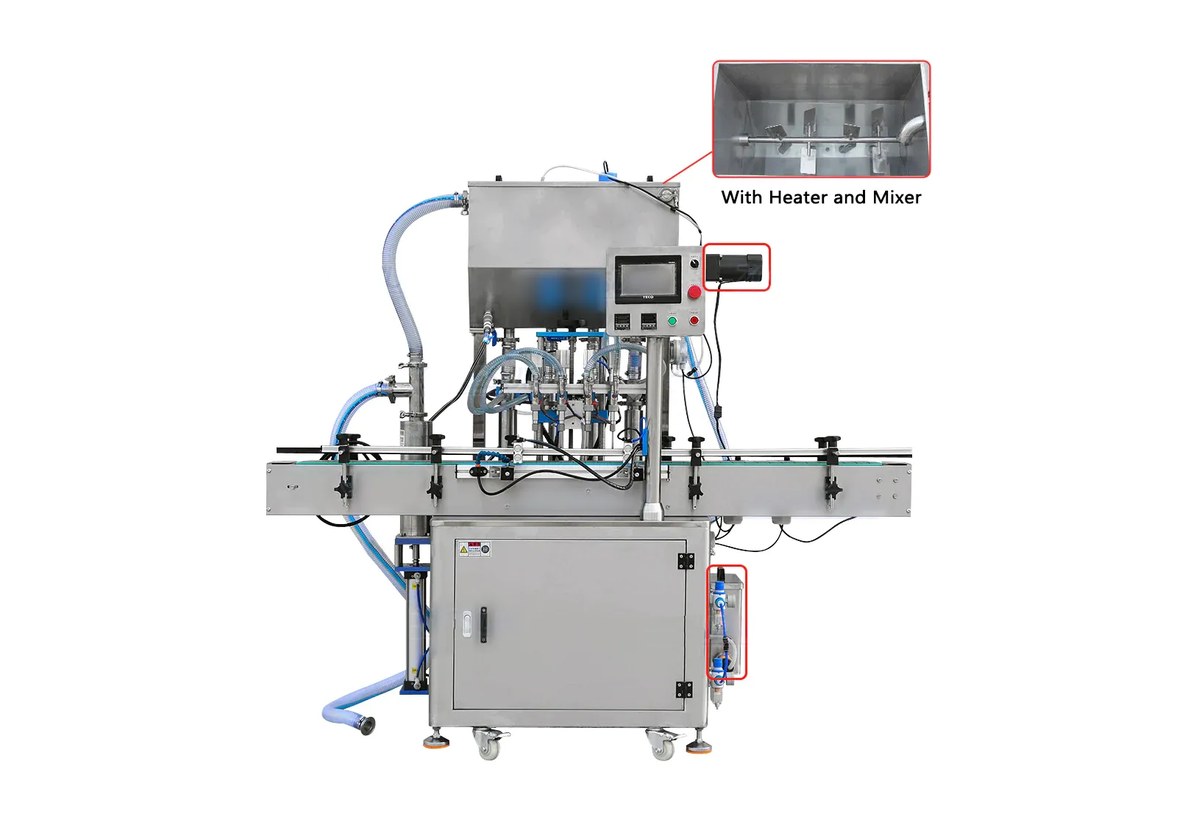
Paste filling projects are decided by the way the product moves, not by a broad label such as cream, sauce or adhesive. Two products with the same apparent viscosity can behave differently when pumped, sheared, heated, cooled or left to settle.
An automatic paste filler can use pistons, servo-driven positive displacement, rotor-lobe pumps or another product-specific feed route. Hopper design, transfer pump, valve bore, hose diameter and nozzle shut-off all affect the finished fill and the amount of product left in the system at changeover.
The final route should be confirmed against representative product and containers.
Positive displacement supports repeatable dosing across many viscous products. Valve and cylinder dimensions must suit the product and fill range.
Servo motion allows controlled acceleration, deceleration and recipe storage, which can help with gentle start, clean cut-off and rapid format changes.
A useful route where continuous feed, gentle product handling or larger doses make a conventional piston less attractive.
Products such as waxes or hot-fill pastes may need controlled temperature from the supply vessel through to the nozzle.
The details differ by machine, but these stages define the core control problem.
Control temperature, agitation, feed pressure and level so the dosing system receives consistent material.
Guides, stops and sensors locate the jar, bottle or tub without distorting it.
The piston or pump delivers the programmed amount while the nozzle controls stringing and drips.
Container release and downstream transfer are arranged to keep the neck or rim clean for closing.
A complete enquiry reduces avoidable assumptions and makes machine comparisons more meaningful.
| Rheology | Viscosity, shear sensitivity, thixotropy, stringing and aeration |
|---|---|
| Inclusions | Particle size, softness, distribution and valve/nozzle clearance |
| Temperature | Ambient, heated, hot-fill or temperature-sensitive operation |
| Dose | Full fill range and acceptable product giveaway |
| Cut-off | Drip-free, suck-back, rotary valve or shut-off nozzle requirement |
| Cleaning | Strip-down time, allergen control, product recovery and wash method |
| Container | Opening size, rim cleanliness, stability and closure method |
Use these configurations to compare machine routes. Final fill range, speed and accuracy are confirmed against your product, container and line.
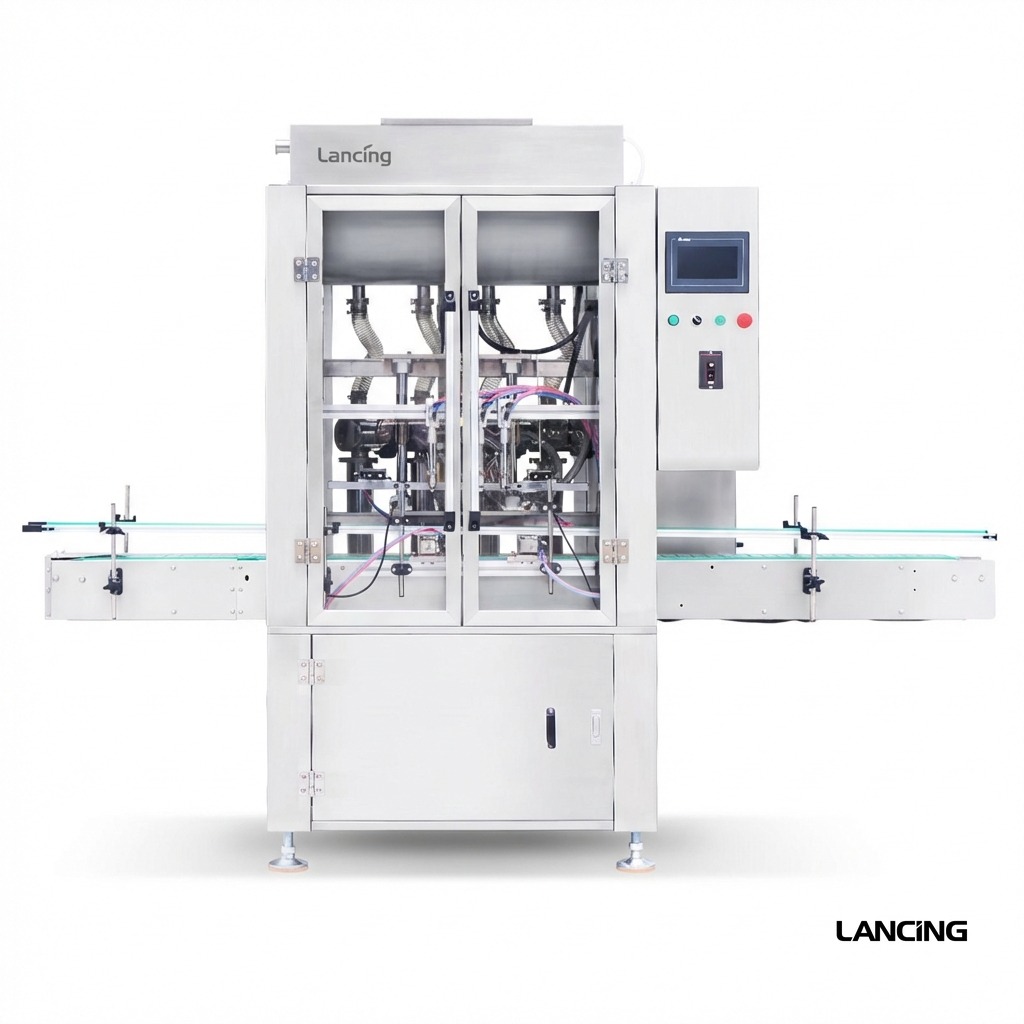
A compact automatic piston example for liquids and pastes such as honey, hand sanitiser and viscous products.
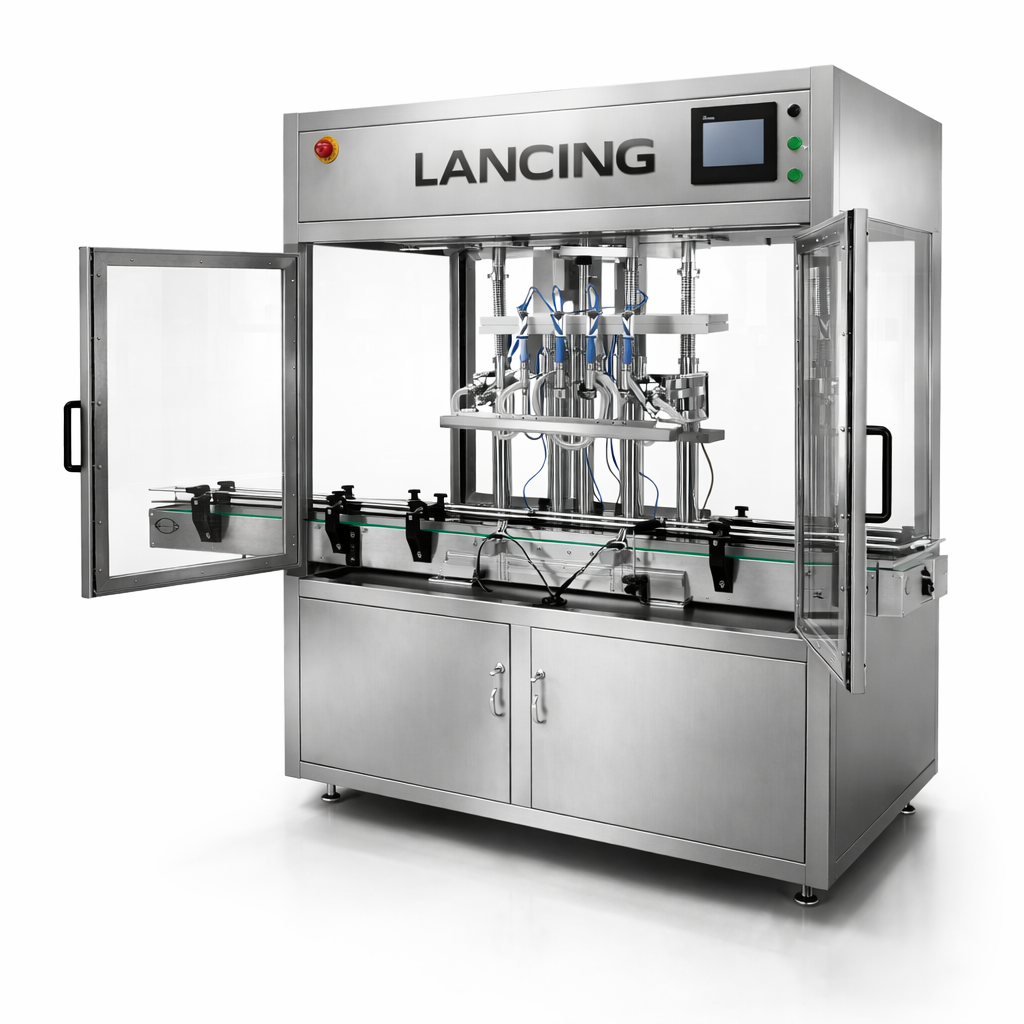
A multi-head route combining servo dosing with a product feed system for higher-throughput paste projects.
A filler performs best when infeed, closure, labelling and accumulation are sized around the same design rate.
Compare alternative filling methods and the equipment that may be needed before or after the filler.
Answers are general guidance. Final suitability depends on product trials, containers and the confirmed machine specification.
Piston fillers suit many viscous liquids and pastes when the product can pass through the selected valve and nozzle and the required dose sits within a practical cylinder range.
Some systems can, but the maximum particle size, softness and distribution must be checked against the valve, hose and nozzle clearances. Product trials are often useful.
A shut-off nozzle, suck-back, nozzle movement, heated product path or alternative pump route may be used. The correct solution depends on how the product separates at the end of the dose.
Yes. The jar opening, rim cleanliness, cap presentation and capping torque should be considered during the filler layout rather than added after the machine is built.
Compare the next most relevant machine routes before you choose a final specification.
Compare automatic piston filling machines for accurate liquid and paste dosing, including multi-head, servo and conveyorised options for UK production lines.
View optionsAutomatic servo filling machines with programmable recipes, controlled fill profiles and multi-head options for liquids, creams, sauces and pastes.
View optionsViscosity, particles, temperature, product feed and cut-off must be considered as one product path before head count or model size is selected.
Viscous products can create restrictions before and after the dosing chamber. The review should cover the supply vessel, hopper outlet, pipework, valves, cylinder or pump, nozzle and the point where the product separates from the nozzle. A filler may measure a repeatable volume yet still be unsuitable if product bridges at the hopper, traps air, damages particles or leaves strings across the container rim.
Temperature must be recorded where it changes viscosity. A sauce, cream, wax, adhesive or gel that flows during a warm trial may behave differently after standing, during a cold start or near the end of a batch. Where agitation, heating or recirculation is proposed, define its purpose and the acceptable effect on the product. Do not assume that more agitation is harmless for products containing particles or sensitive structures.
Nozzle selection is part of the quality result. Shut-off, suck-back, diving and cut-off arrangements should be evaluated with the actual container opening and fill level. The trial should inspect rim cleanliness, strings, trapped air and product damage as well as dose repeatability. Product recovery and safe access for cleaning should be assessed at the same time because heavy product left in hoses, manifolds or hoppers becomes waste and changeover load.
This page owns the automatic selection and line-integration decision. Detailed paste-machine and application pages are kept on Paste Fillers UK, while piston and pump volumetric principles are covered more deeply at Volumetric Fillers UK.
| Design area | Suitability question | Output and accuracy condition | Cleaning/changeover evidence | Utility or interface |
|---|---|---|---|---|
| Product feed | Can the hopper, transfer pump and pipework keep the dosing system consistently full without damaging the product? | Test start-up, refill and end-of-batch conditions as well as steady running | Measure recoverable product and demonstrate access to feed components | Confirm electrical, pneumatic, heating or agitation duties where required |
| Positive-displacement module | Can valves, seals and passages handle viscosity, particles and temperature across the full dose range? | Test minimum, maximum and common fills with the normal feed condition | Demonstrate removal, flushing or clean-in-place route supported by the design | Confirm air demand or servo/pump power and the product-pressure boundary |
| Nozzle and cut-off | Does the nozzle enter the pack safely and separate the product without strings or rim contamination? | Inspect dose result together with cut-off and container cleanliness at sustained speed | Show how the nozzle is opened, stripped and verified clean | Confirm nozzle motion, drip tray and reject or stop logic |
| Multi-head distribution | Can every head receive the same product condition and remain balanced? | Record head-to-head results after start-up and after a refill or pause | Show manifold recovery, cleaning and reassembly controls | Confirm product-feed capacity, controls and conveyor interfaces |
| Container handling | Can the pack remain stable while a heavy product is deposited? | Test the least stable container at the highest realistic fill height and line condition | Include guides, nests and contact parts in the changeover check | Confirm sensors, gating, conveyor speed and downstream closure timing |
Send a representative product, container set and cleaning brief so the automatic paste-filling route can be narrowed safely.
Particles, temperature and product feed can change the suitability of an otherwise similar filler.
Record particle size, shape, concentration and whether particles settle or are damaged by shear. The proposed feed path, valves and nozzle should be trialled with representative product rather than inferred from the liquid phase alone.
Only when product behaviour and process requirements justify it. The specification should define the required production temperature or mixing objective and confirm that heat or agitation will not damage, separate or aerate the product.
When a sauce, paste or prepared product contains pieces, the controlling dimension is the largest credible inclusion or cluster. The hopper outlet, inlet valve, cylinder or pump, discharge valve, hose and nozzle must all pass it without blockage or unacceptable damage.
Define whether pieces float, settle or cluster, then assess the first, middle and final packs from the batch. A correct total dose does not prove a representative solids distribution.
Set the permitted level of cutting, crushing or separation. Check upstream transfer as well as the filler because damage may occur before the product reaches the hopper.
Identify valve cavities, hose low points and nozzle mechanisms where pieces can remain. The agreed changeover must include inspection and correct reassembly.
Send enough product to replicate mixing, settling, refill and low-level conditions. The particulate-product filling guide explains the trial evidence, while the product-feed guide covers hopper and replenishment control.
Record the most difficult normal viscosity, temperature, particle load, fill quantity and pack opening. That brief should drive the hopper, feed, valve, nozzle, cleaning and acceptance decisions together.
Send the product, pack and output details that matter. We’ll compare the most practical dosing and line options for you.