Servo piston filling
Electronic control of piston travel supports recipe-based volume and speed profiles.
Apply programmable piston or pump motion where fill speed, acceleration, cut-off and format change need closer control.
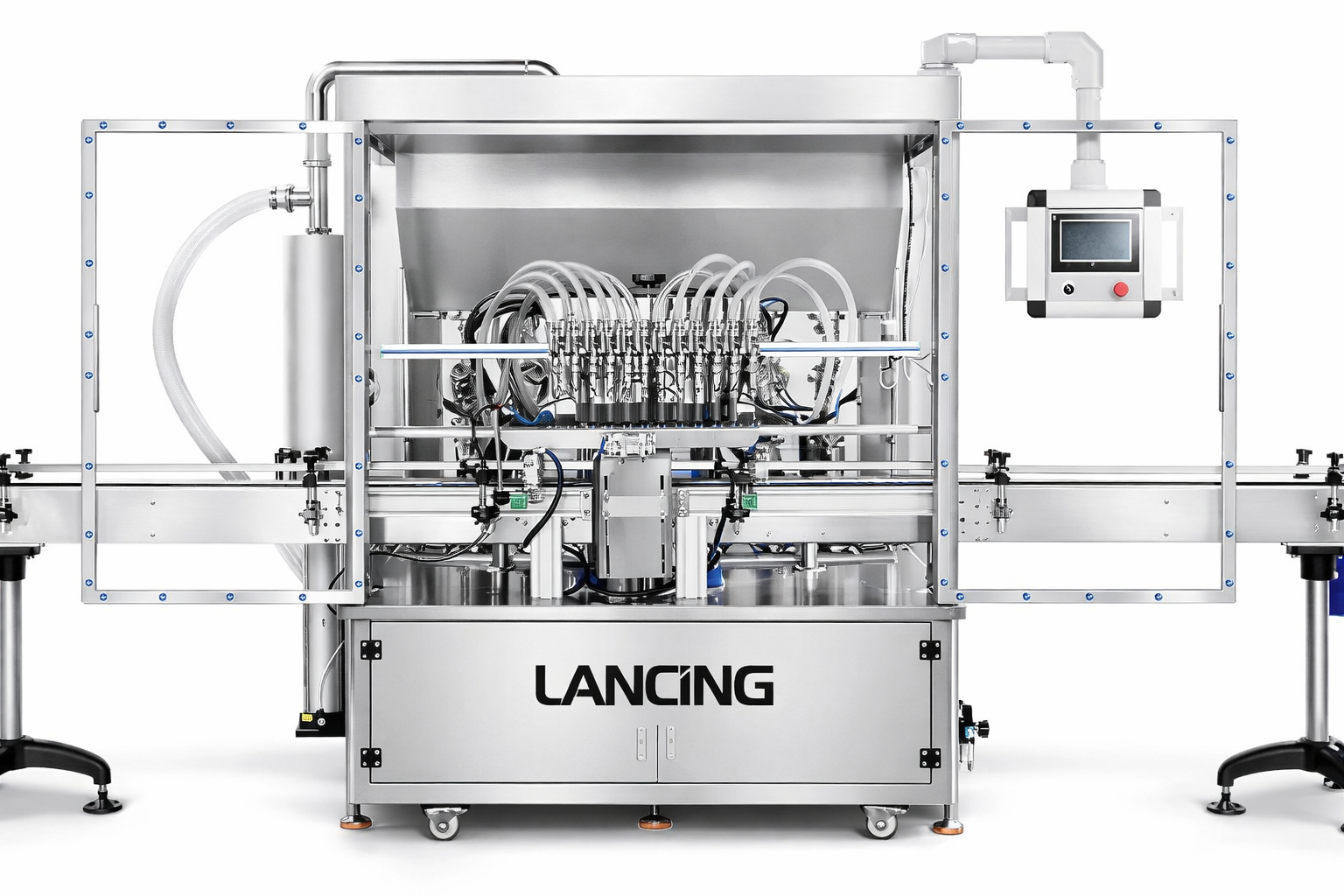
A servo filler uses an electric servo system to control the dosing movement. Rather than relying only on fixed pneumatic timing, the machine can apply repeatable position and speed profiles that are stored with each product recipe.
The practical value is not simply an electronic specification. Controlled motion can reduce splash at the start of a liquid fill, slow the final part of a paste dose, coordinate suck-back or nozzle lift and shorten changeovers when the next container format is already proven.
The final route should be confirmed against representative product and containers.
Electronic control of piston travel supports recipe-based volume and speed profiles.
Pump revolutions, displacement and fill motion can be coordinated with container indexing.
Nozzle lift or tracking can be synchronised with the dose for bottom-up or moving-container filling.
The filler can exchange status, speed and fault information with cappers, labellers and conveyors.
The details differ by machine, but these stages define the core control problem.
The operator chooses a validated product and pack format on the HMI.
Guides, nozzles and change parts are confirmed before automatic mode.
Servo position and speed follow the stored fill sequence.
Production checks confirm dose, cut-off and line balance under real conditions.
A complete enquiry reduces avoidable assumptions and makes machine comparisons more meaningful.
| Servo architecture | Piston, pump or combined dosing and nozzle axes |
|---|---|
| Recipe control | User access, parameter limits, audit expectations and backup |
| Feedback | Position, pressure, flow or weight verification as required |
| Nozzle motion | Fixed, diving, lifting or tracking |
| Changeover | Tool-less guides, stored settings and change-part identification |
| Connectivity | Remote support, line communication and data requirements |
Use these configurations to compare machine routes. Final fill range, speed and accuracy are confirmed against your product, container and line.
A high-head-count servo paste filling example with a product feed pump for higher-output lines.
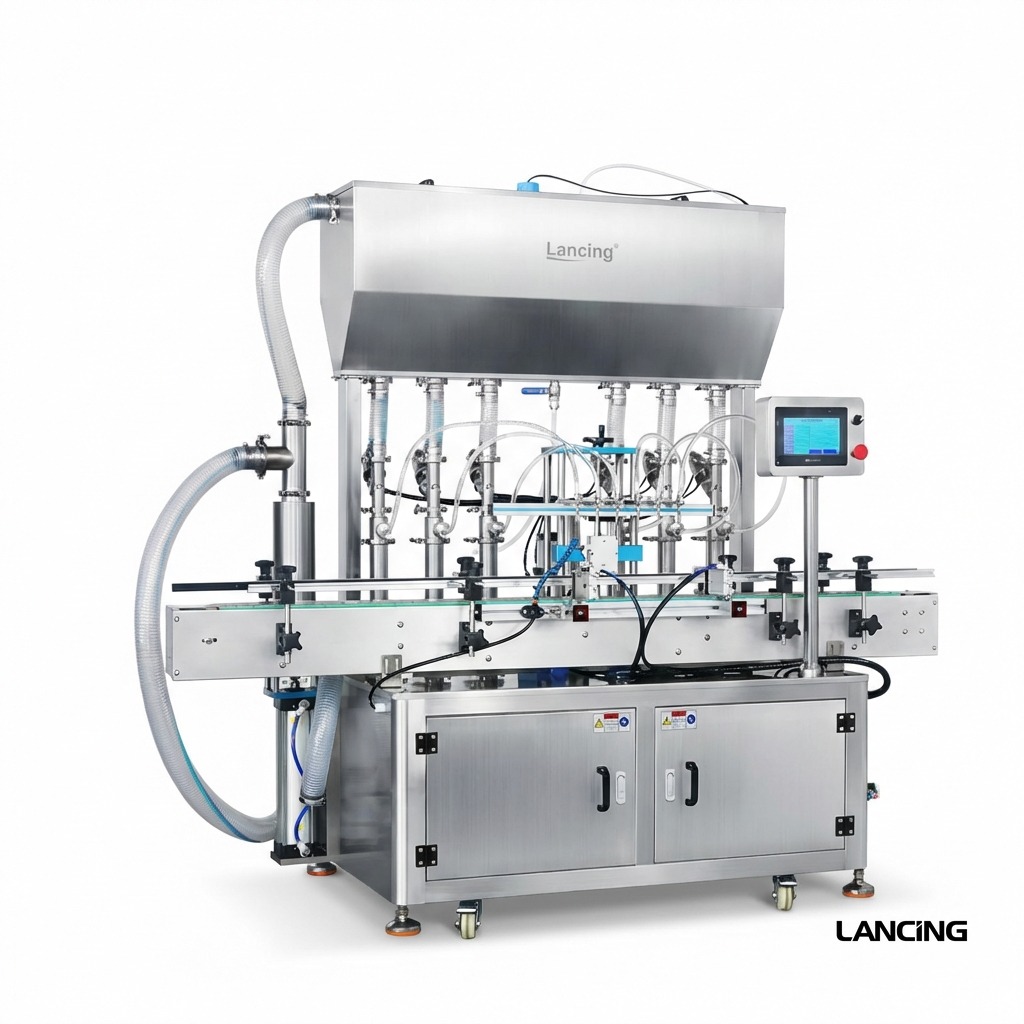
A more compact multi-nozzle format for automatic paste or viscous-liquid applications.
A filler performs best when infeed, closure, labelling and accumulation are sized around the same design rate.
Compare alternative filling methods and the equipment that may be needed before or after the filler.
Answers are general guidance. Final suitability depends on product trials, containers and the confirmed machine specification.
Servo control improves repeatability of position and speed, but final fill accuracy still depends on the dosing principle, product feed, temperature, air, seals and calibration.
Yes, when the piston or pump, valves and nozzles are selected for the product. Servo profiles can help control start, main fill and cut-off phases.
Recipes can restrict and repeat validated parameters, but physical change parts, product condition and container settings still need to be checked.
Sometimes, but future expansion must be designed into the frame, controls, product supply and conveyor from the outset. It is not always a simple bolt-on change.
Compare the next most relevant machine routes before you choose a final specification.
Multi-head automatic filling machines with scalable nozzle counts for liquid and paste production, including line-speed, feed and changeover guidance.
View optionsAutomatic tracking-head filling machines that follow moving bottles for continuous conveyor operation with liquid, cream, shampoo, detergent and paste products.
View optionsCompare automatic piston filling machines for accurate liquid and paste dosing, including multi-head, servo and conveyorised options for UK production lines.
View optionsServo technology is most useful when its motion, feedback and recipe functions are tied to a measurable product or production requirement.
Servo control can provide programmable motion, stored recipes and coordinated multi-head movement, but the motor does not remove the need for a suitable dosing principle. The proposal should state what the servo drives—such as a piston, pump, nozzle axis or tracking carriage—and what production result the programmed profile is intended to improve.
A fill profile can divide the cycle into controlled stages. Slow entry or discharge may reduce splash and foam; a different end-of-fill motion may improve cut-off; and a stored recipe may reduce manual adjustment between established formats. Those benefits should be demonstrated with representative product and packs. A complex profile that works only after informal operator tuning is not the same as a documented production recipe.
Feedback and fault handling must be defined. Position feedback confirms motion, but it does not by itself prove that product reached the container. Product level, pressure, flow, container presence and reject logic may still be needed according to the application. The control narrative should explain what the machine does after a missing bottle, low product level, nozzle obstruction, downstream stop or emergency stop, and how it returns to a known state.
Servo filling is often evaluated alongside piston and pump volumetric systems. The specialist Volumetric Fillers UK site covers those broader dosing families, while this page concentrates on automatic motion, recipe and multi-head control.
| Control area | Purpose | Evidence at trial or FAT | Changeover and support | Interface |
|---|---|---|---|---|
| Dose-axis motion | Deliver the selected piston or pump movement consistently | Record commanded and actual motion with the real product and dose set | Demonstrate recipe selection, protected parameters and manual recovery | Drive, PLC/HMI, safety state and product-feed permissives |
| Nozzle profile | Manage entry, fill height, foam, splash or cut-off | Observe nozzle clearance and product result in the least forgiving container | Store or document the profile for each approved format | Container-present sensing, lift axis and fill-complete signal |
| Multi-head coordination | Keep parallel heads synchronised while allowing calibration | Record each head separately and verify balance after pauses and refill | Show individual calibration limits and authorised adjustment route | Common product supply, conveyor indexing and reject identification |
| Recipe management | Reduce setup variation between established products and packs | Load a saved recipe and verify the first accepted containers without hidden tuning | Confirm naming, revision, access levels and backup method | HMI, PLC memory and any factory data export required |
| Fault and recovery logic | Place the machine in a safe, known state and prevent incorrect fills | Challenge missing bottle, low product, downstream stop and guarded access conditions | Demonstrate restart, purge or line-clearance instructions | Line control, safety circuit, alarms, upstream/downstream handshakes |
Ask for the servo function, recipe scope and acceptance evidence to be written into the quotation.
Servo functions should be linked to a documented dosing, motion or recipe requirement.
No. Servo motion can improve control and repeatability of the driven axis, but delivered dose still depends on the dosing principle, product condition, feed stability, valves, nozzles, calibration and the agreed measurement method.
Record the approved product and pack, dose setting, motion profile, nozzle height, conveyor or indexing settings, relevant alarm limits and any change parts. Access rights and a backup method should also be agreed.
Servo motion creates a repeatable setting only when the approved values, product-contact arrangement and changeover state are controlled together.
A recipe should identify the product and pack combination it was proved against, not simply carry a convenient operator name. Record the dosing axis, fill quantity, speed profile, nozzle positions, delays, suck-back or shut-off setting where applicable, and any linked container-handling values. The approved operating window should be clear enough that an operator can select the format without recreating the trial.
Access levels should distinguish routine product selection from engineering changes. Where a value can alter dose, nozzle clearance or line timing, define who may edit it, how the change is recorded and what first-off checks are required before production resumes. This protects a verified servo filling process from gradual, undocumented adjustment.
Recipe backup is only useful when restoration is tested. The commissioning record should identify where the current recipe set and machine configuration are stored, how a replacement control device would be loaded, and which checks prove that the restored values still match the mechanical format. Use the accuracy and output guide to define the measurement evidence required after a change.
| Controlled field | Why it matters | Evidence before release | Change response |
|---|---|---|---|
| Dose command | Defines the commanded displacement, pulse count or delivered quantity | Individual fill results using the agreed reference method | Require a first-off sample check after any adjustment |
| Motion profile | Acceleration and delivery rate can affect foam, splash, shear and cycle time | Representative product through start, steady run and pause/restart | Record the reason for change and recheck pack condition and output |
| Nozzle positions | Clearance and vertical movement affect access, contact and bottom-up filling | Smallest opening and limiting container heights | Verify the mechanical format before enabling automatic operation |
| Container timing | Gates, sensors and fill permission must match the real pack pitch | Normal gaps, missing container and blocked-discharge challenge | Reconfirm no-container/no-fill and tracking recovery |
| Product-contact set | A recipe cannot compensate for the wrong piston, pump, hose, valve or nozzle | Parts list and visual line-clearance check | Prevent release until the approved set is fitted and identified |
| Revision and backup | Uncontrolled copies can restore obsolete or incompatible values | Dated export and observed restore verification | Quarantine superseded versions and record the active release |
Challenge low product, missing containers, an interrupted fill, downstream blockage and a power or air recovery that is safe to simulate. The line should make clear whether a container must be rejected, refilled, inspected or removed, and whether the dosing axes need to re-home before automatic production restarts. On a multi-head filling machine, the record should also identify the affected head and prevent an average result from hiding one incorrect channel.
Send the product, formats, changeover frequency and control expectations so the recipe and recovery scope can be defined before quotation.
Servo technology is useful only when the controlled motion, settings and maintenance arrangements are clearly connected to the production requirement.
Servo is a motion-control method, not a complete description of how product is measured. A servo can drive a piston, pump, auger or other element. The metering principle, product path and nozzle still determine much of the application suitability.
The servo versus piston guide separates the drive and dosing decisions.
Operators should change only values needed for controlled production and within approved limits. Engineering parameters that affect safe motion, collision clearance, calibration or machine protection should be restricted. The permitted range and reason for each adjustment should be documented.
Use role-based access where available and record deviations from the released recipe.
A useful fault message identifies the affected axis or function, the safe machine state and the authorised recovery action. A generic drive code without process context can lead to repeated resets or unsafe intervention.
Test loss of position, obstruction, communication and power-recovery scenarios during FAT, including what happens to containers and part-filled packs.
Recheck configuration, direction, homing, limits, feedback, mechanical coupling, safe motion and the affected product recipe before production release. A replacement with the same part number can still require parameter loading or alignment.
Use controlled backups and a post-maintenance verification sequence that includes no-container movement and representative filled packs.
A simpler pneumatic or mechanical drive may be appropriate when it meets the verified dose, product, changeover and output duty with acceptable control and evidence. Servo should not be added solely as a marketing feature.
Compare lifecycle competence, spares, diagnostics and recipe needs as well as initial function. Select the least complex system that consistently meets the requirement.
Send the product, pack and production evidence that applies to your line. Lancing can identify the next trial, specification or integration step without treating an assumption as a confirmed result.
Send the product, pack and output details that matter. We’ll compare the most practical dosing and line options for you.