Single tracking nozzle
One nozzle follows each container and can suit larger doses or narrower machine formats.
Coordinate nozzle travel with the bottle so filling can take place without a conventional stop-and-index cycle.
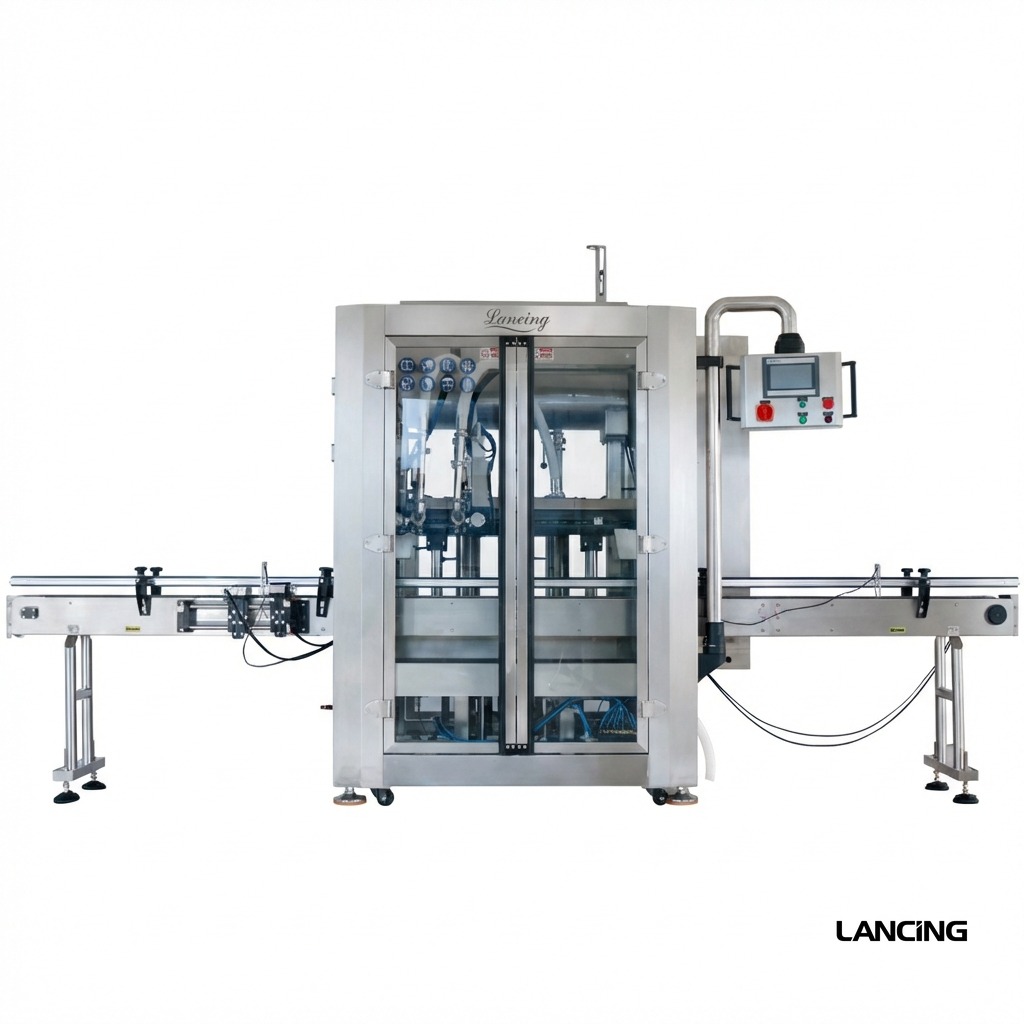
A tracking-head filler synchronises one or more nozzles with containers moving on the conveyor. The nozzle enters or aligns with the bottle, travels with it during the dose and then returns for the next container.
The approach can improve line flow and reduce stop-start container movement. It requires reliable bottle detection, stable conveyor speed, accurate servo motion and enough return time for the nozzle carriage to reset without losing the next pack.
The final route should be confirmed against representative product and containers.
One nozzle follows each container and can suit larger doses or narrower machine formats.
Two heads fill consecutive or paired containers to increase throughput.
Horizontal travel can be combined with vertical nozzle movement for foam or splash control.
Encoder and sensor feedback coordinate bottle position, nozzle travel and dose timing.
The details differ by machine, but these stages define the core control problem.
Sensors confirm bottle presence and establish the tracking target.
The carriage matches conveyor speed and aligns the nozzle.
The dosing system operates while the nozzle follows the bottle.
The head clears the container and returns for the next cycle.
A complete enquiry reduces avoidable assumptions and makes machine comparisons more meaningful.
| Conveyor speed | Stable, encoded motion within the tracking-axis range |
|---|---|
| Container stability | Base, height, neck position and guide support |
| Tracking stroke | Travel distance available for the required fill time |
| Dose time | Product flow, nozzle bore and profile while tracking |
| Return time | Carriage reset without missing the next container |
| Fault logic | Missed bottle, jam, slip and loss-of-position response |
Use these configurations to compare machine routes. Final fill range, speed and accuracy are confirmed against your product, container and line.
A twin-head moving-container filler shown for liquid and paste products including cream, honey, shampoo and detergent.
A filler performs best when infeed, closure, labelling and accumulation are sized around the same design rate.
Compare alternative filling methods and the equipment that may be needed before or after the filler.
Answers are general guidance. Final suitability depends on product trials, containers and the confirmed machine specification.
It is an automatic machine whose nozzle carriage follows containers while they continue moving on the conveyor, rather than stopping every container for filling.
It can reduce indexing time, but the final output depends on fill duration, tracking stroke, return time, container pitch and downstream capacity.
Yes when paired with a suitable positive-displacement dosing system and nozzle. Product feed and clean cut-off remain critical.
Stable bottles or jars with repeatable position and enough guide support are preferred. Lightweight or irregular packs need careful conveyor trials.
Compare the next most relevant machine routes before you choose a final specification.
Automatic servo filling machines with programmable recipes, controlled fill profiles and multi-head options for liquids, creams, sauces and pastes.
View optionsMulti-head automatic filling machines with scalable nozzle counts for liquid and paste production, including line-speed, feed and changeover guidance.
View optionsAutomatic bottle filling lines integrating filling, capping, labelling, coding, inspection and conveyors for UK liquid, paste and chemical production.
View optionsContinuous-motion filling depends on synchronised container detection, conveyor movement, nozzle travel and dose delivery under normal line interruptions.
A tracking-head system follows containers while product is discharged, reducing the stop-start time associated with indexed filling. The engineering task is to keep nozzle position, conveyor motion and dose delivery synchronised throughout the usable travel. Container pitch, speed variation, sensor timing and the acceleration limits of the tracking carriage all affect the available fill window.
The container should be assessed at the point where it is least stable. Lightweight bottles, tall packs, irregular bases and close pitches can move under guide pressure or conveyor vibration. The nozzle must enter and leave without touching the pack, and the line must know what to do when pitch is lost, a bottle is missing or a downstream stop occurs during a tracking cycle.
Product behaviour still sets the dose time. A tracking axis cannot compensate for an undersized product feed, a nozzle that cuts off poorly or a liquid that foams at the required flow. The trial should compare the product result at the intended conveyor condition and after normal line interruptions, not only during a continuous demonstration.
Because tracking systems connect closely to conveyors and downstream machinery, the control interface and safety zones should be reviewed with the complete line. The broader integration decision is covered on the automatic filling line integration page.
| Design area | Production question | Evidence required | Acceptance focus |
|---|---|---|---|
| Container detection and pitch | Can the system identify each pack and maintain a valid tracking window? | Run normal gaps, missing bottles and the least stable format | No incorrect fill, contact or untracked container release |
| Tracking motion | Can the carriage match conveyor movement throughout entry, fill and withdrawal? | Record operation at the agreed conveyor conditions and after restart | Position remains within the safe nozzle-to-container window |
| Dose delivery | Can the selected filling principle complete the dose while moving? | Use representative product, minimum/maximum fills and normal supply | Dose, foam, splash and cut-off meet the agreed production criteria |
| Line interruption | What happens if the downstream line stops during a cycle? | Challenge controlled stop, emergency stop and blocked discharge conditions | Product flow and motion stop safely; recovery is defined and repeatable |
| Format change | How are pitch, guides, sensor positions and nozzle height changed? | Complete an agreed changeover using identified settings and parts | First accepted containers are produced without undocumented adjustment |
| Controls and guarding | Are the moving zones, interlocks and line handshakes clear? | Test guards, permissives, upstream/downstream signals and alarms | Safe states, fault messages and authorised recovery are demonstrated |
Send container pitch, product dose and conveyor information before comparing tracking-head layouts.
Continuous-motion output depends on a valid tracking window and controlled response to gaps and stops.
It can reduce indexing losses when the product can be dosed within a controlled moving window and the container, conveyor, sensors and downstream line remain stable. The benefit should be demonstrated against the complete cycle.
The control system should identify the missing or misplaced container and inhibit the affected fill without losing tracking of following packs. The exact response and reject logic must be defined and tested for the proposed line.
Send the product, pack and output details that matter. We’ll compare the most practical dosing and line options for you.