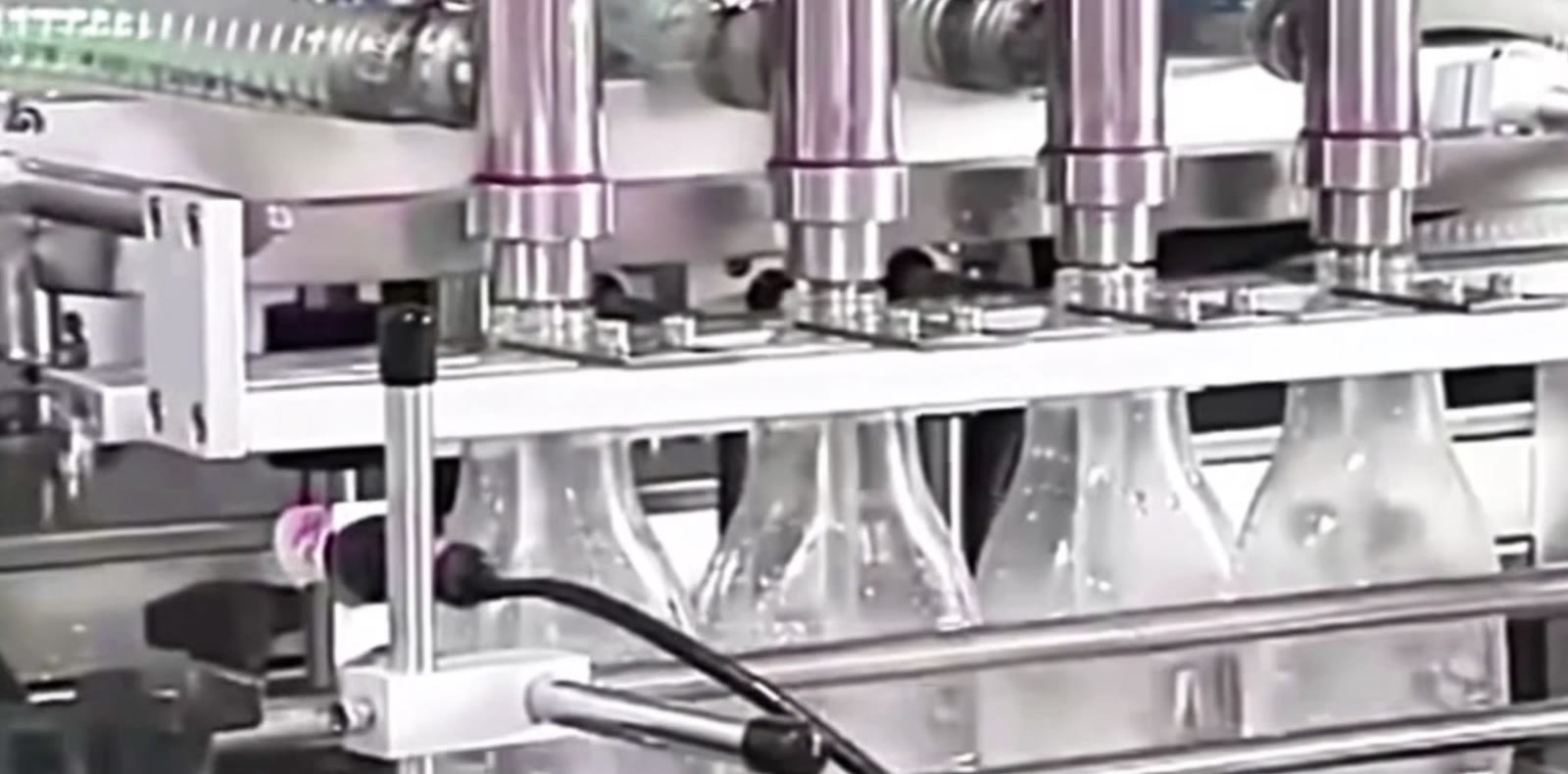
Can a piston filling machine also be a servo filling machine?
Yes. A servo piston filler uses a piston as the volumetric metering element and a servo-controlled drive to move it. The piston still determines how product is drawn in and displaced, while the servo can provide programmable stroke, speed profile and position control. Suitability still depends on the product path, valve arrangement, seals, feed conditions and the required dose range.
Ask the supplier to state both the metering principle and the drive arrangement. A description that says only “servo filler” does not explain what physically measures the product.
When does servo control add useful value to piston filling?
Servo control is most useful when the project benefits from repeatable programmable movement, stored product recipes, controlled acceleration or deceleration, several fill sizes, or a defined nozzle and dosing sequence. It can also make authorised adjustment and diagnostic feedback clearer. It does not remove the need for suitable valves, seals, nozzles, product feed and representative trials.
The value should be linked to a real requirement, such as controlled cut-off for a stringing product or repeatable change between specified doses, rather than treated as a general guarantee of better performance.
Can a pneumatic piston filler be suitable without servo control?
Yes. A well-matched pneumatic piston filler can be a practical choice for stable products, a limited range of doses and applications where simple adjustment and maintenance are priorities. Its performance depends on cylinder sizing, air quality and pressure, valves, seals, product feed and the operating method. Servo control is not automatically necessary for every accurate or repeatable piston-filling duty.
Compare the required production states and changeovers, not the technology label alone. A simpler system may be preferable when it satisfies the verified duty with fewer controls and parts.
Which option is better when one line has several fill sizes?
The better option is the configuration that covers the verified minimum and maximum doses without forcing the metering element to work outside a stable operating range. Servo control may make recipe changes easier, but the piston, cylinder, pump or tooling may still need to change. Very wide ranges can require more than one metering module or a defined compromise.
Request a format schedule showing each product, dose, product condition, metering hardware, recipe and change part. Test both range extremes rather than approving only a convenient middle dose.
How should maintenance be compared between servo and non-servo fillers?
Compare the whole machine, not only the drive. Product-contact seals, valves, tubing, cylinders, pumps and nozzles usually determine routine cleaning and wear, while servo systems add drives, motors, feedback and software-controlled motion. Pneumatic systems add air preparation, cylinders and valves. The maintenance burden depends on duty, environment, access and available competence.
Ask for planned tasks, safe isolation points, diagnostic information, backup arrangements and the critical spares needed for both product-contact and motion components.
What evidence should be used to compare servo and piston quotations?
Use a common requirement and acceptance method: the same products, containers, doses, measurement method, production states and changeovers. Record raw results for every active head, not just an average. Include first-off, steady running, refill, pause and restart, plus any product or pack condition that represents the difficult end of the duty.
A comparison is meaningful only when each quotation states its metering principle, drive, change parts, assumptions, exclusions and the conditions under which performance will be demonstrated.