Design evidence
- Product-contact boundary and flow path
- Material and elastomer schedule
- Drain and recovery points
- Cleaning connections and component access
A hygienic filler is a complete product-contact system that can be cleaned by the agreed method and returned to production in a controlled way. Material choice matters, but drainage, joints, valves, nozzles, seals, access, cleaning coverage and verification determine whether the design is practical.
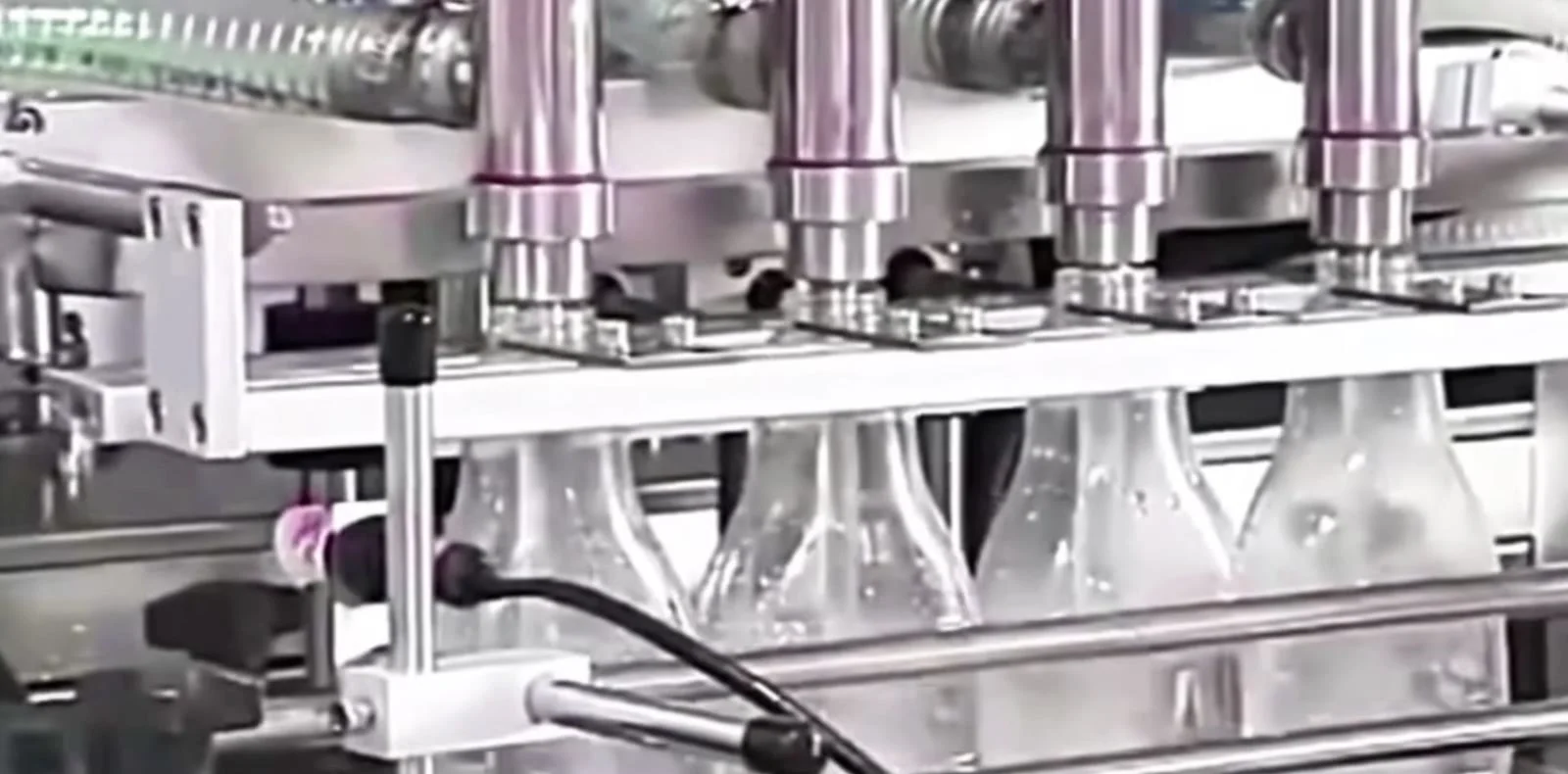
A filling machine should be described as hygienic only in relation to a defined product, cleaning method and operating environment. The product-contact system should avoid unnecessary hold-up, allow cleaning fluids or manual access to reach the relevant surfaces, drain as intended and support inspection or verification before production restarts.
The assessment begins at the product supply connection and continues through tanks, hoses, pumps, valves, manifolds and nozzles. It also covers removable parts, drip trays, guards, conveyors and surrounding surfaces where leaked or splashed product could create a contamination or cleaning problem. Hygienic design is therefore a system requirement, not a decorative stainless-steel finish.
| Design area | Questions to ask | Evidence before acceptance |
|---|---|---|
| Product-contact geometry | Are joints, ports, valve cavities and transitions accessible to the cleaning method? | Drawings, dismantling demonstration and inspection of the proposed product path. |
| Drainage and hold-up | Where can product or cleaning fluid remain after draining? | Drain test, recovery quantity and identified residual-volume points. |
| Seals, hoses and elastomers | Are materials compatible with product, temperature and cleaning chemistry? | Verified material schedule and replacement/inspection method. |
| Nozzles and manifolds | Can every head be cleaned, drained and reassembled consistently? | Head-by-head cleaning route, inspection access and setup verification. |
| External machine surfaces | Can spills and overspray be removed without exposing operators to moving parts or electrical hazards? | Safe cleaning procedure, guarding state, drainage and protected equipment boundaries. |
| Installation interfaces | Do the upstream supply, floor, services and downstream line preserve the intended hygienic boundary? | Final layout, connection details, access envelope and site responsibilities. |
| Method | Where it may fit | Key limitations to resolve |
|---|---|---|
| Manual strip-down cleaning | Short product paths, visible residues and components that can be removed safely and inspected directly. | Operator task, safe isolation, lifting, part identification, reassembly and verification. |
| Clean-out-of-place (COP) | Selected product-contact parts removed to a separate controlled wash station. | Transport, part protection, cleaning coverage, drying, storage and correct return to the machine. |
| Clean-in-place (CIP) | Closed paths designed for repeatable circulation or application of cleaning fluids without routine full dismantling. | Flow and coverage, chemistry, temperature, time, drainage, recovery, utilities and validation. |
| Replaceable or disposable product path | Selected small-dose or campaign applications where replacing tubing or a defined wetted set simplifies changeover. | Material compatibility, installation control, waste, priming, calibration and the non-disposable machine interfaces. |
Define how product pressure, heat, stored energy and machine motion are made safe before intrusive cleaning begins.
Identify usable recovery, waste routes and the residual product left in vessels, hoses, valves and nozzles.
Use the validated sequence for dismantling, COP or CIP, including chemistry, temperature, time and mechanical action where relevant.
Complete the evidence required by the site before components are reassembled or the product path is released.
Confirm part identity, seals, head setup, recipe and the first acceptable product before normal production resumes.
No. Stainless steel may be appropriate for many product-contact duties, but hygienic performance also depends on surface condition, joints, seals, drainage, product hold-up, access, cleanability and the way the machine is installed and operated. A material label cannot prove that the complete product path can be cleaned effectively.
The required material grade and surface treatment must be confirmed against the product, cleaning chemicals, temperature and site standard.
Clean-in-place, usually shortened to CIP, is a defined method of circulating or applying cleaning fluids through product-contact parts without routinely dismantling the complete path. A credible CIP proposal must define coverage, flow, temperature, chemistry, time, drainage and verification rather than relying on the label alone.
CIP is not automatically sterilisation, and it does not prove that every component is reached. The site’s validated cleaning procedure remains application-specific.
Strip-down cleaning can be more suitable when the product path is short, components are readily accessible, products contain pieces or residues that need visual inspection, campaigns are small, or the CIP infrastructure would add disproportionate complexity. The decision should compare cleaning effectiveness, operator safety, changeover time and reassembly control.
Clean-out-of-place can also be used where selected parts are removed and cleaned in a separate controlled station.
Allergen or high-risk changeover should begin with the site’s documented hazard assessment and cleaning-validation requirement. The filler design should then minimise inaccessible hold-up, support the required dismantling or cleaning route, identify product-contact parts and make post-clean inspection or verification practical.
Do not assume that flushing until visibly clear satisfies the site’s allergen or contamination-control standard.
Cleaning should be verified against an agreed method and acceptance criterion appropriate to the product and site. Evidence may include visual inspection, recorded cycle parameters, swab or rinse testing, component inspection and controlled reassembly, depending on the risk and the site’s validated procedure.
The machine supplier can demonstrate access and the intended cleaning sequence, but the product owner remains responsible for validating the site process.
Specify the products, contamination risks, cleaning chemicals, temperatures, campaign pattern, required cleaning method, product-contact boundaries, dismantling limits, verification method, utilities, drainage and the surrounding production environment. These details are needed before a hygienic design or CIP claim can be assessed meaningfully.
Include the upstream product supply and downstream closure equipment because the cleanability boundary rarely stops at the dosing head.
The Food Standards Agency states that equipment surfaces in food-handling areas should be maintained in good condition and be easy to clean and disinfect. EHEDG Guideline 8 describes hygienic-design principles intended to support a risk-based approach to preventing food contamination, while HSE guidance emphasises safe systems of work for hygienic cleaning and the need to control machinery hazards.
Primary references: Food Standards Agency premises and equipment guidance, EHEDG hygienic design principles, and HSE food-processing machinery guidance. Final suitability and cleaning validation remain application-specific.
Send the product, cleaning standard and line interfaces. Lancing can identify which parts of the filling system need access, removal, circulation, drainage or application-specific verification.
Send the product, pack and output details that matter. We’ll compare the most practical dosing and line options for you.