Unit 5A Jefferson Way, Thame, Oxfordshire, OX9 3SZ

Search machine types, applications, buyer guidance and filling-line topics.

Consistent visual level

When should an overflow filling machine be used?

An overflow filling machine fills each suitable rigid container to a controlled visible level and returns excess liquid through the nozzle or recovery path. It is useful when presentation level matters more than identical internal bottle volume, provided the neck, seal, product recovery and foam behaviour are compatible.

  • Use rigid containers with suitable necks
  • Control the return-product route
  • Verify quantity separately where required
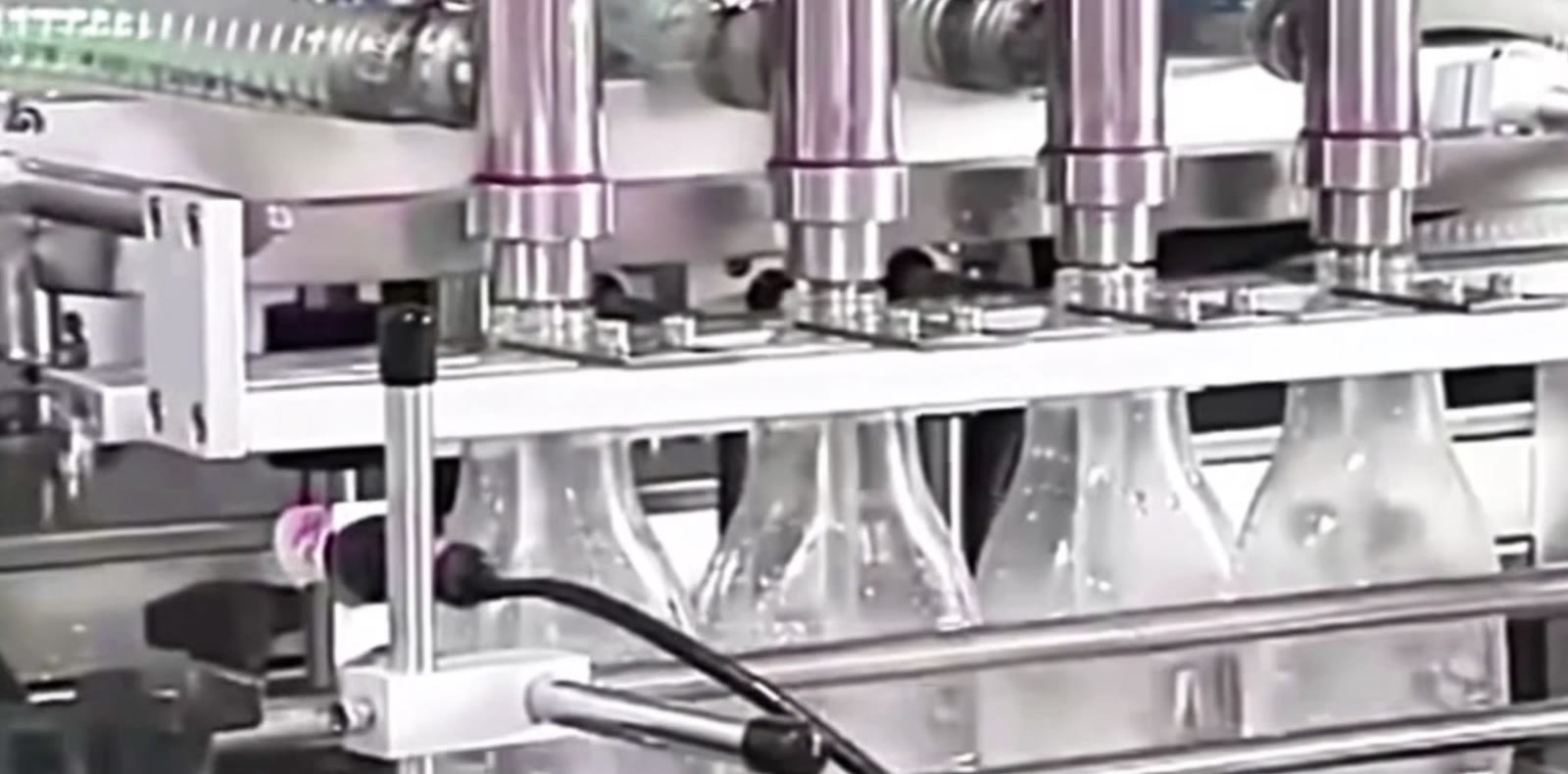
Automatic filling machine with bottles presented beneath filling nozzles
Machine selection should be verified with the real product, container and production sequence
Direct answer

Use overflow filling when the visible level is the primary presentation target

An overflow filler supplies product through a sealed nozzle until the liquid reaches a set level, then returns excess product through a recovery path. This can produce a consistent shelf appearance in suitable rigid bottles even when their internal capacities vary slightly.

The system must be judged as a complete recirculating product path. Bottle neck geometry, seal quality, pump or pressure source, foam, return flow, temperature and cleaning can all change the result.

Operating principle

Fill, establish level and recover excess product

  1. 1

    Seal the nozzle to the bottle neck

    The container must be rigid and repeatable enough to create the required seal without distortion or leakage.

  2. 2

    Supply product to the container

    A controlled pump or pressure route sends liquid through the fill path while displaced air and excess product are managed.

  3. 3

    Reach the selected level

    The nozzle geometry defines the final visible level rather than relying on identical internal bottle volume.

  4. 4

    Return excess product

    Product flows back through the return path to a recovery vessel or controlled recirculation system.

  5. 5

    Release a clean, stable bottle

    Vacuum or pressure is removed, drips are controlled and the bottle transfers to capping without a wet or damaged neck.

Selection conditions

The bottle neck is as important as the liquid

ConditionWhy it mattersEvidence to collect
Rigid containerFlexible walls can deform under pressure or vacuum and change the level.Full production bottle range, including lightest and warmest condition.
Repeatable neckThe nozzle must seal and locate consistently.Neck drawings, tolerance data and physical samples.
Low to medium viscosityHigh viscosity can extend recirculation and trap air or foam.Product at minimum and maximum production temperature.
Foam behaviourFoam can enter the return path and change tank or pump conditions.Sustained run, refill and pause/restart trial.
Return-product acceptabilityRecirculated product may warm, aerate or become contaminated if poorly controlled.Defined return route, residence time and cleaning method.
Technology comparison

Compare level filling with measured quantity

RoutePrimary controlBest question to ask
Overflow fillingVisible liquid level in a suitable bottle.Will the neck seal and return path remain stable with the real product?
Vacuum fillingVisible level created by pressure difference and product recovery.Is the bottle rigid and is the vacuum/product return arrangement practical?
Volumetric or flowmeter fillingMeasured quantity delivered to the container.Does the process need a defined volume rather than a cosmetic level?
Net-weight fillingMeasured product mass in the container.Is mass the controlling quantity and can the container be weighed stably?
Trial and acceptance

Run enough bottles to expose return-path behaviour

A few perfect bottles from a clean, cool system do not prove a recirculating fill. Test the smallest and largest neck, normal bottle variation, tank refill, product temperature drift, foaming, pause/restart and the condition of returned product after a sustained run.

Check net quantity separately

A repeatable visual level is not the same as a repeatable net quantity. Agree the package-checking and legal quantity-control method independently of the level-filling presentation requirement.

Buyer questions

Common questions about overflow filling

How does an overflow filling machine work?

An overflow filling machine seals a specialised nozzle against the container neck, supplies liquid until the chosen level is reached and returns excess product through a recovery path. The result is a consistent visible level even where internal bottle volume varies slightly, but the container neck and seal must be repeatable.

What is the difference between overflow and vacuum filling?

Both routes can create a controlled visible level, but the product movement, nozzle design and recovery system differ. Vacuum filling draws liquid using pressure difference, while pressure-overflow systems can supply and return product through the nozzle. The correct route depends on liquid behaviour, bottle rigidity, neck geometry and required output.

Why are overflow fillers considered for foaming liquids?

Overflow systems can keep liquid moving through a controlled fill and return path while the nozzle remains sealed to the neck, which may help selected foaming products reach a repeatable visible level. Foam, air entrainment, return-tank design and product recirculation still need to be tested under sustained production.

Does a consistent fill level mean every bottle contains the same volume?

No. A consistent visible level does not guarantee identical volume when container internal capacity varies. The business must use a separate quantity-control and checking method appropriate to the product and legal duty. Overflow filling is principally a level-control technology, not proof of net contents.

Which bottles suit overflow filling?

Overflow filling normally requires rigid containers with repeatable neck geometry that can form the necessary nozzle seal and withstand the filling pressure or vacuum. Lightweight, flexible, damaged or inconsistent necks may move, leak or distort, so the full production bottle range should be trialled.

What should be checked for cleaning an overflow filler?

Review the supply tank, pump, manifold, nozzles, seals, return lines and recovery vessel as one product path. The design should show how product drains, where residue can remain, how foam is controlled during recirculation and which parts must be removed or opened for cleaning and inspection.

Before quotation

Information Lancing needs to confirm the filling route

  • Production product and difficult normal condition
  • Minimum, maximum and common fill quantity
  • Container, opening, closure and format range
  • Sustained output and shift pattern
  • Product feed, cleaning and utilities
  • Upstream, downstream and acceptance requirements

Send product, pack and production evidence

Lancing can compare practical machine routes, identify what can be quoted from the available information and define where samples or a representative trial are needed.

Choose with confidence

Get a filling-machine shortlist built around your product.

Send the product, pack and output details that matter. We’ll compare the most practical dosing and line options for you.

Call an expert