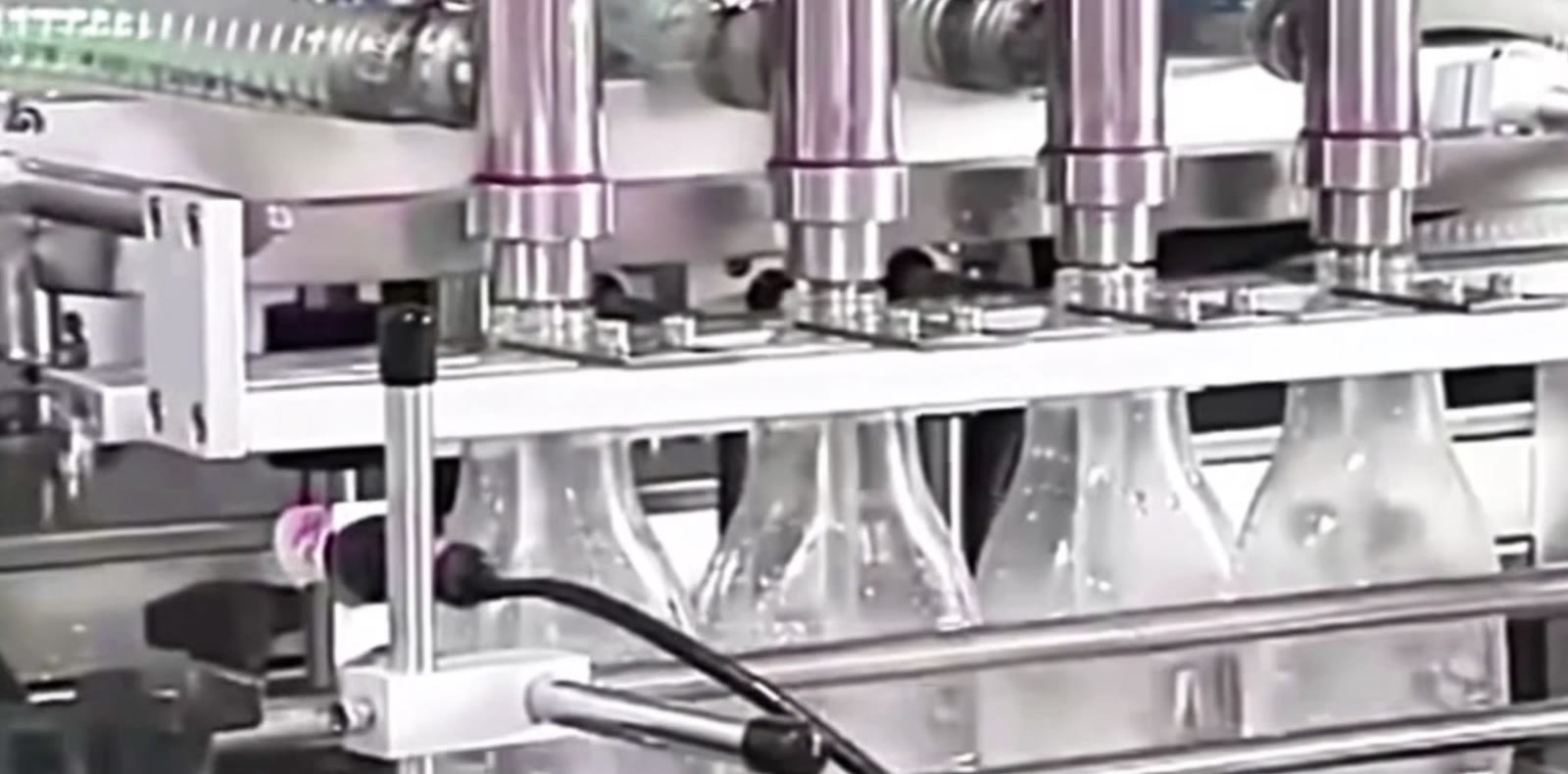
Why can bottles with the same fill level contain different volumes?
Bottles that look identical can have different internal capacities because of manufacturing tolerance, wall thickness, base geometry or deformation. A level-filling method adds or removes product until each bottle reaches the set height, so the amount needed can vary. The visible result is consistent, but the measured volume may not be.
Use representative bottle batches and measure both fill level and quantity when either is important. Do not assume the moulded nominal capacity is identical for every container.
Why can equal volumetric doses show different levels?
Equal measured volumes can sit at different heights when container internal geometry or capacity varies. Temperature, foam and retained bubbles can also change the apparent level immediately after filling. A volumetric filler can therefore be dosing consistently even when a row of bottles does not look perfectly level.
Agree when the visual check is made and whether bottle capacity variation is acceptable. If shelf appearance is critical, the container specification may need attention as well as the filler.
Which containers are suitable for vacuum level filling?
Vacuum level filling is generally associated with rigid containers that can withstand the pressure difference and provide a repeatable sealing surface around the filling nozzle. Flexible or easily distorted containers may change shape, draw product unpredictably or fail to seal. Product foaming, volatility and compatibility also matter.
Trial production containers, including tolerance extremes, and confirm neck sealing, deformation, return-product handling and cleanability before choosing the method.
How should the declared quantity affect the selection?
The buyer must define whether the controlled production quantity is mass, volume, fill level or a combination of checks. A level-filled bottle may still need a separate net-content control process, while a volumetric dose may need a visual-level tolerance. Legal and quality requirements should be reviewed by the responsible organisation for the product and market.
Write the required measurement, instrument, sampling method and acceptance rule into the URS rather than relying on a generic “accurate fill” statement.
Can a foaming product be filled to a consistent level?
Foam can make the apparent surface unstable and can be drawn into return paths or sensing points. The product may need controlled flow, reduced free fall, suitable nozzle position and settlement time before the true liquid level can be assessed. Some foaming liquids are better controlled by a measured-dose method with a separate visual check.
Trial the real formulation and temperature, and inspect the pack after the realistic time before closure and after foam has settled.
What should be measured during a fill-level versus fill-volume trial?
Record bottle identity or batch, internal-capacity variation where available, product condition, metered quantity, visible level, foam, deformation, neck cleanliness, overflow or return behaviour and the downstream closure result. Use the same containers for direct comparisons when possible.
The decision should state which result is primary and which is a secondary quality check. Raw data and photographs taken at a defined time make the trade-off clear.