Unit 5A Jefferson Way, Thame, Oxfordshire, OX9 3SZ

Search machine types, applications, buyer guidance and filling-line topics.

Measured liquid flow

How do flowmeter filling machines measure liquid doses?

A flowmeter filler measures the liquid moving through each filling path and closes the valve or stops the pump when the programmed quantity is reached. The useful result depends on the meter type, product condition, air-free supply, nozzle control and the way the measured value is verified with the real pack.

  • Match the meter to the actual liquid
  • Control air, pressure and temperature
  • Verify every dose range under production conditions
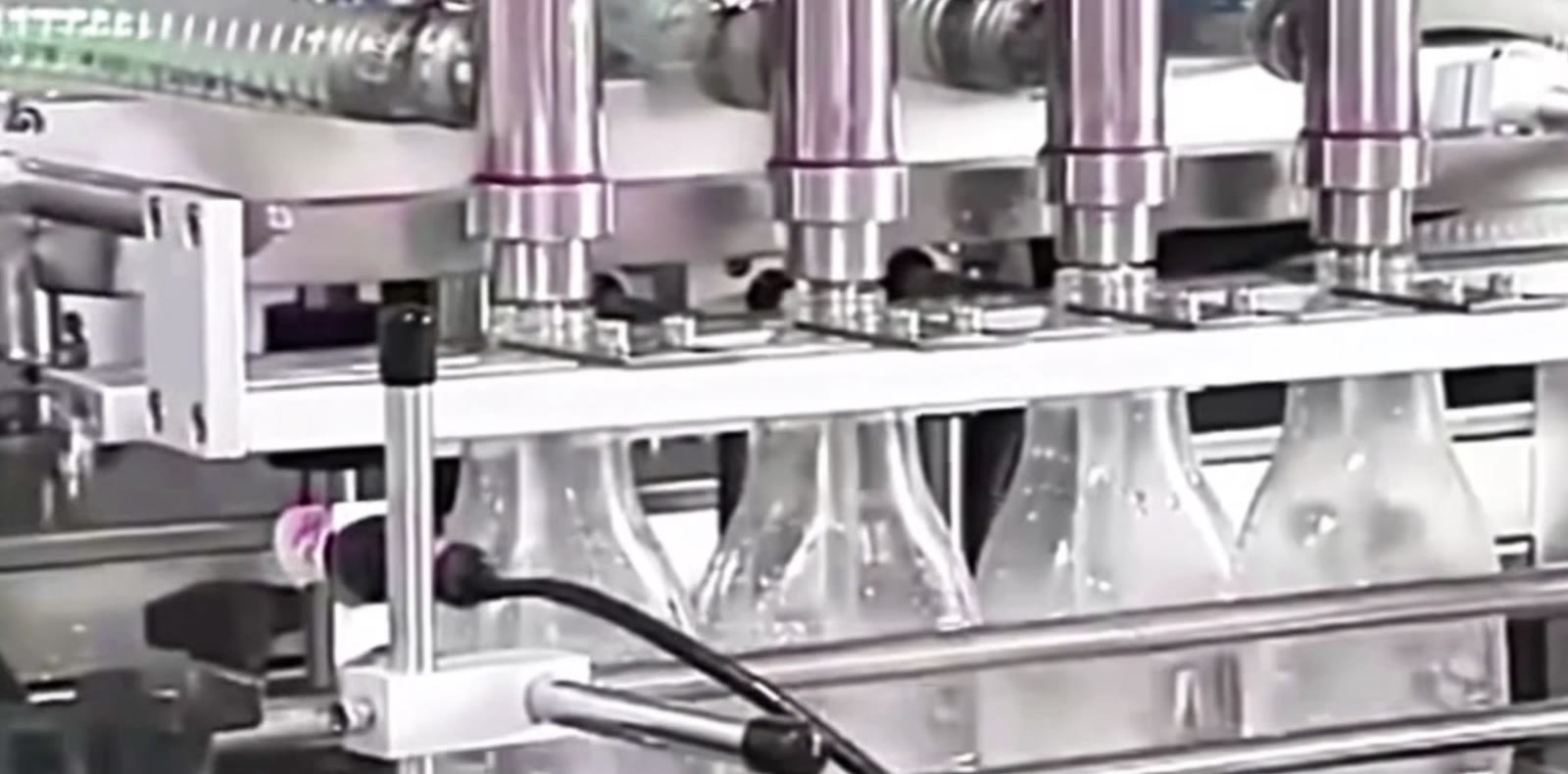
Automatic filling machine with bottles presented beneath filling nozzles
Machine selection should be verified with the real product, container and production sequence
Direct answer

Measure the product in motion, then verify the package

A flowmeter filling machine converts the measured liquid flow into a controlled dose. The selected meter must suit the product, while the controller, pump or pressure source, valve and nozzle must stop the moving liquid cleanly enough to meet the agreed package result.

The term flowmeter filler covers several measurement principles. The correct meter is not chosen from fill volume alone. Product conductivity, viscosity, density, temperature, particles, aeration, chemical compatibility and required cleaning all influence the practical choice. A machine should therefore be specified around the complete operating window and an independent package-checking method.

Meter selection

Match the measurement principle to the liquid

Product conditionWhy it mattersSelection evidence
Conductivity and chemistrySome meter principles need a conductive liquid while others rely on moving parts or a measured mass response.Product data, compatibility review and a representative sample.
Viscosity and temperatureChange pressure loss, density and meter or valve response.Minimum and maximum production temperature with observed flow behaviour.
Air or foamEntrained air can make the measured stream differ from the settled package result.Cold start, normal running, refill, pause and restart observations.
Particles or fibresCan obstruct, wear or change the response of the product path.Largest normal particle, concentration and distribution through a trial.
Cleaning methodDefines whether the meter and pipework can be flushed, stripped, drained or cleaned in place.Written cleaning sequence and acceptable product recovery.
System sequence

A flowmeter is only one part of the fill

  1. 1

    Stabilise the product supply

    Define the vessel, pump, pressure, recirculation and level conditions that feed the meter. Air leaks, cavitation or refill surges can invalidate a good calibration.

  2. 2

    Measure the moving product

    The meter produces a signal linked to volume or mass flow. Installation orientation, full-pipe condition and product compatibility must suit the selected technology.

  3. 3

    Control fast and final flow

    The controller can use one or more flow stages to approach the target while limiting foam, splash and valve-closing overshoot.

  4. 4

    Stop cleanly at the nozzle

    Valve response, hose expansion, suck-back and nozzle design determine whether the measured dose remains in the container or appears as a drip after release.

  5. 5

    Verify the package result

    Use an independent weight or volume check appropriate to the product and quantity-control duty. Record product condition with the result.

Where it may fit

Compare flow measurement with the production task

ApplicationWhy flowmeter filling may be consideredImportant limitation
Free-flowing liquidsPipe-based dosing and programmable profiles can support automatic bottle lines.Air, pressure and temperature must remain controlled.
Oils and lubricantsControlled flow can cover different pack sizes where meter and seals suit the product.Viscosity change and nozzle residue need testing.
Foaming detergentsMulti-stage flow and diving nozzles can be combined with measured dosing.The settled package result may differ from the aerated stream.
Large packsFlow measurement can support jerrycans, drums or IBCs where the supply route is stable.Safe access, hose management and independent quantity checks remain essential.
Frequent format changesA pipe-based route can avoid cylinder-size changes in suitable applications.The meter still has an operating window and minimum practical dose.
Trial and acceptance

Test the meter through the states that disturb flow

  • Production product at minimum and maximum temperature
  • Smallest, largest and most common dose
  • Normal supply vessel, pump and pressure conditions
  • Cold start, steady run, refill, pause and restart
  • Nozzle residue and bottle-neck cleanliness
  • Independent package-checking method

Do not calibrate with water and assume the job is finished

Water can prove basic operation but cannot reproduce the density, aeration, viscosity, chemistry or shut-off behaviour of many production liquids. Use the real product when those factors can change the meter or final pack.

See the sample-trial guide and accuracy and output guide.

Buyer questions

Common questions about flowmeter filling

How does a flowmeter filling machine work?

A flowmeter filling machine measures the liquid passing through the product path and uses the measured signal to stop the dose at a programmed target. The controller, meter, valve or pump and nozzle must be treated as one dosing system because air, pressure changes, temperature and valve response can all affect the final container quantity.

When is flowmeter filling preferable to piston filling?

Flowmeter filling may be preferable when the liquid can be measured reliably in continuous flow and the project benefits from a largely pipe-based product path, stored fill profiles or broad container formats. Piston filling may remain more suitable where positive displacement, thick products or particulates require a different valve and cylinder route.

Can a flowmeter filler handle foaming liquids?

A flowmeter filler can be considered for foaming liquids when the meter remains suitable and the discharge profile, diving nozzle, product feed and bottle release are controlled. The meter measures quantity; it does not by itself prevent foam, wet necks or product carry-over, so the complete filling sequence must be trialled.

Why does temperature matter to flowmeter filling?

Temperature can change viscosity, density, entrained air and the response of both the product and meter. Volumetric measurement may need density-aware verification where product temperature changes, while mass-flow measurement still depends on a stable, correctly installed and product-compatible system. Record temperature with every trial result.

How should a flowmeter filler be calibrated and checked?

Calibration should use the production product, real dose range, normal feed conditions and an independent checking method. Check cold start, steady running, refill, pause and restart, then record the meter target, actual package result and any product temperature or density condition needed to reproduce it.

What information is needed to quote a flowmeter filling machine?

Provide the liquid, viscosity and temperature range, whether the product foams or contains solids, minimum and maximum dose, container opening, required output, supply vessel and pressure, cleaning method, utilities and the equipment before and after filling. Samples are valuable where meter compatibility or nozzle behaviour is uncertain.

Before quotation

Information Lancing needs to confirm the filling route

  • Production product and difficult normal condition
  • Minimum, maximum and common fill quantity
  • Container, opening, closure and format range
  • Sustained output and shift pattern
  • Product feed, cleaning and utilities
  • Upstream, downstream and acceptance requirements

Send product, pack and production evidence

Lancing can compare practical machine routes, identify what can be quoted from the available information and define where samples or a representative trial are needed.

Choose with confidence

Get a filling-machine shortlist built around your product.

Send the product, pack and output details that matter. We’ll compare the most practical dosing and line options for you.

Call an expert