Flow passage
Bore, length, bends and restrictions affect pressure loss, fill time and sensitivity to particles or product texture.
The nozzle is where product behaviour, dose cut-off, container tolerances and closure-zone cleanliness meet. Its design should be tested with the real product and opening.
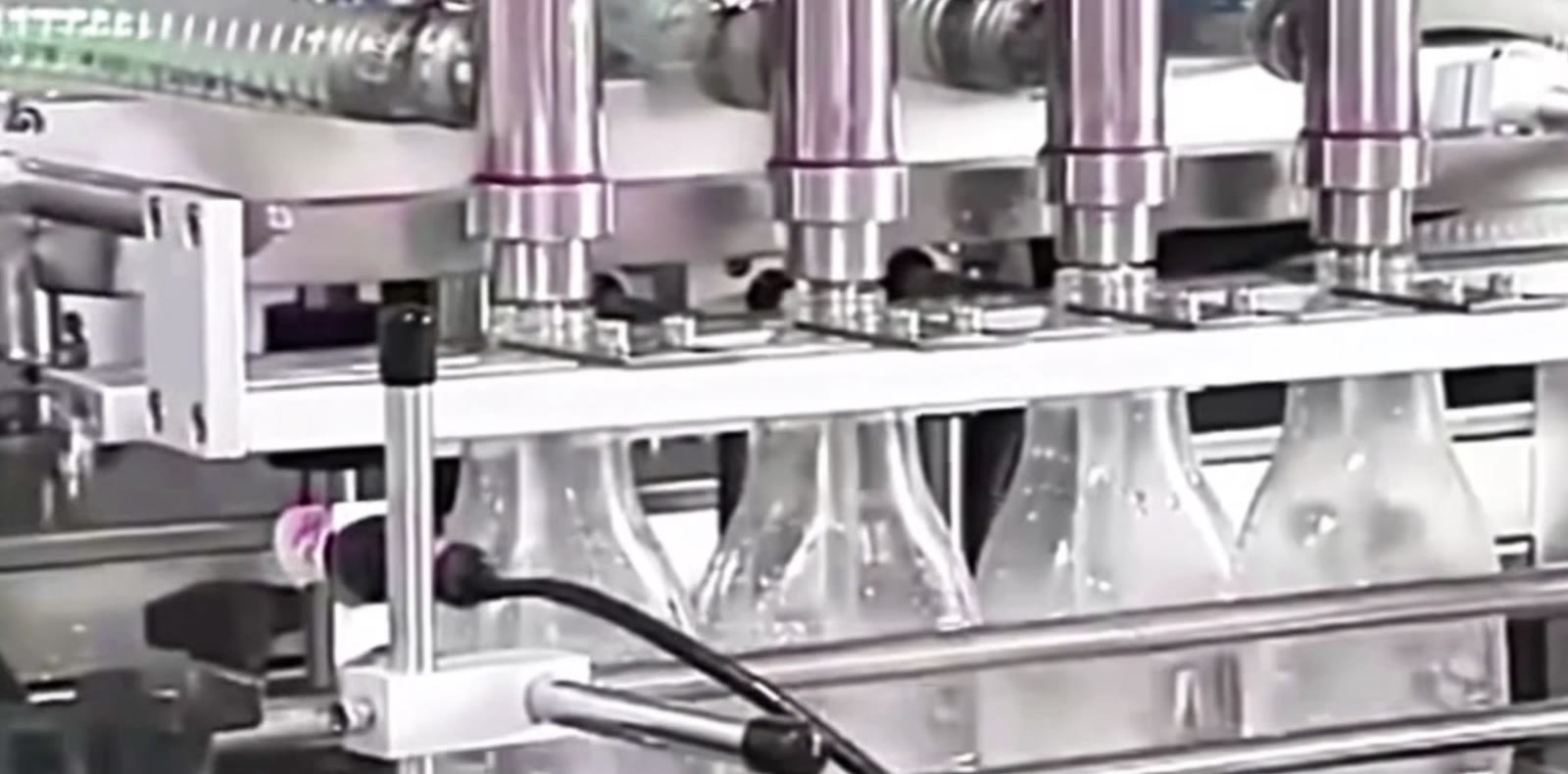
It has to pass the required product, control the end of the dose, fit the container opening and support the required cleaning/changeover method.
Bore, length, bends and restrictions affect pressure loss, fill time and sensitivity to particles or product texture.
Valves, suck-back, shut-off tips or other mechanisms must stop flow without drawing air, damaging the product or leaving a long string.
Outside diameter, tip shape, insertion depth and motion must tolerate the real opening and bottle position.
Product traps, dismantling, seals, exposed threads and identification determine whether cleaning is reproducible.
These are investigation routes, not automatic fixes. Product feed, pump behaviour, settings and container handling can create symptoms that appear to be nozzle faults.
| Observed requirement or problem | Nozzle/design points to assess | Trial observation |
|---|---|---|
| Foaming or splash | Reduce free fall, consider controlled insertion/rising fill, review bore and flow profile, vent displaced air. | Foam height, settlement time, wet neck and repeatability after restart. |
| Stringing product | Positive shut-off near the tip, cut-off speed, tip geometry, product temperature and withdrawal timing. | String length, tail on the bottle, external nozzle build-up and closure-zone cleanliness. |
| Thin-liquid drip | Valve closure, residual pressure, suck-back amount, seals, vertical head and nozzle dwell. | Drips per cycle, air draw-back, dose change and conveyor contamination. |
| Particles or inclusions | Minimum passage, valve geometry, shear risk, settlement and product agitation. | Blockage, damaged inclusions, head-to-head variation and cleaning access. |
| Small opening | Outside diameter, alignment tolerance, venting and bottle-neck variation. | Contact with the neck, splash, missed insertion and cycle sensitivity. |
| Wide dose range | Required flow at the large dose versus cut-off control at the small dose. | Cycle time, overshoot, minimum stable settings and whether separate tooling is justified. |
| Frequent cleaning | Tool-free removal where suitable, part identification, seals, drainability and safe access. | Strip-down sequence, retained product, reassembly error and first-off verification. |
Video from the side and above can help separate late flow, product string, bottle movement and nozzle withdrawal timing.
Include photographs or drawings of the neck, production samples and a description of foam, stringing or drip behaviour. Lancing can identify the highest-risk nozzle questions for a trial.
Possible causes include product stringing, trapped pressure, unsuitable shut-off geometry, worn seals, air in the product path, delayed valve closure or a cut-off setting that does not match the product.
Diving or rising fill motion may help control foam, splash or product fall distance. It must be matched to bottle opening, level rise, nozzle outside contamination and container indexing.
Enough clearance is needed for real dimensional variation, conveyor movement and indexing tolerance. The exact allowance must be established from production samples and the selected nozzle motion.
A single nozzle may cover part of both ranges, but cut-off, bore, pressure loss, suck-back and cleanability can conflict. The difficult products should be trialled rather than assuming one compromise suits every format.
Yes. Drips, foam and wet threads can interfere with closure application or sealing. The acceptance check should follow the filled container into the next station.
Send the product, pack and output details that matter. We’ll compare the most practical dosing and line options for you.