Automatic filling machine troubleshooting by symptom, pattern and process state
Find the cause faster by first proving the measurement, then identifying whether the problem follows the product, one channel, every channel, the container or a line event.
- Prove the symptom
- Separate common and head faults
- Record the process state
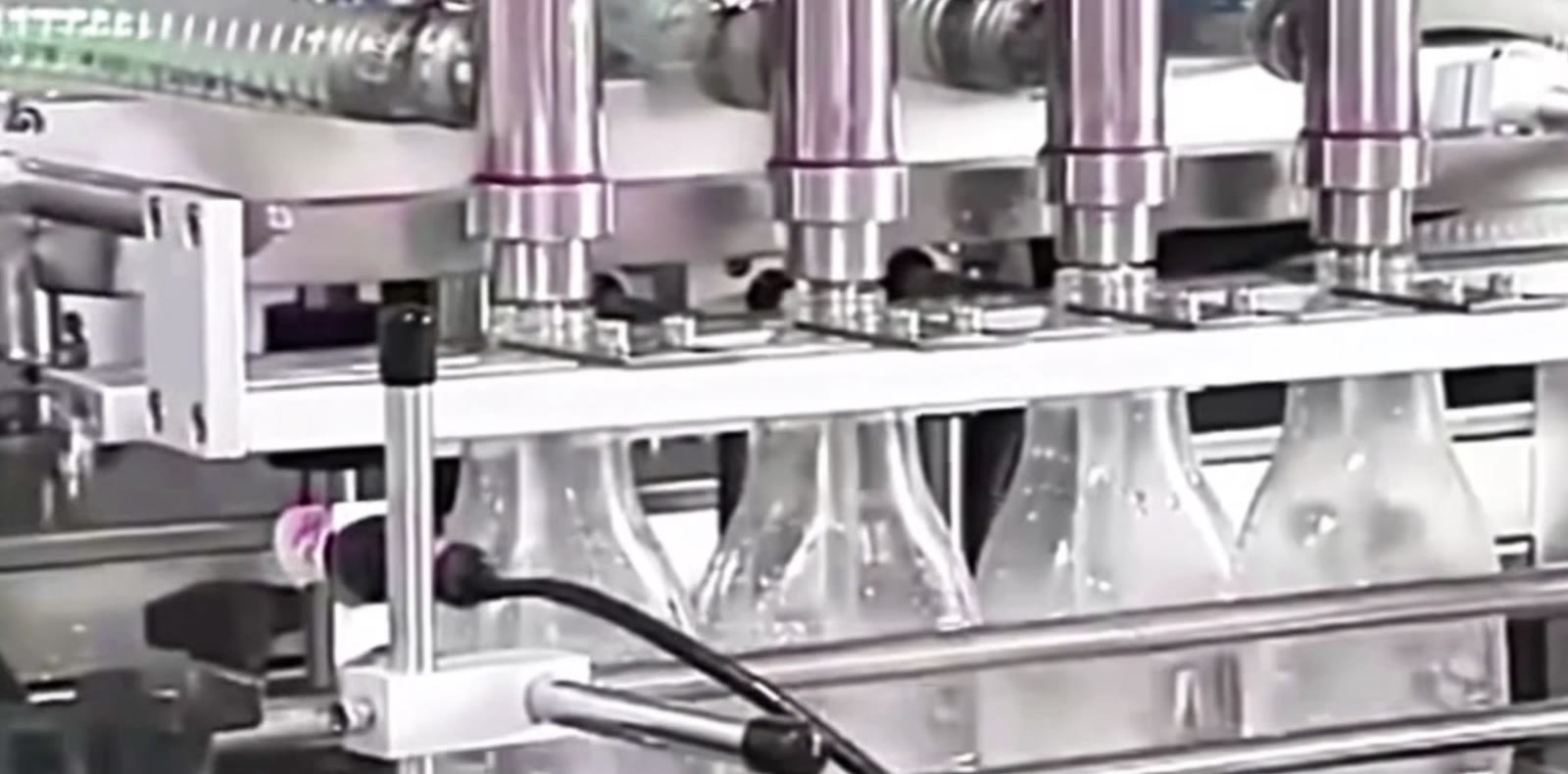
Use a repeatable five-step fault-finding method
Changing several settings at once can hide the cause and create a new problem. Record the initial condition, make one controlled change and retain the result.
- Make the condition safe. Stop and isolate when required by the risk or authorised procedure before inspecting the product path or moving parts.
- Prove the measurement. Check instrument, units, tare, sample handling and whether volume or mass is being compared appropriately.
- Classify the pattern. Does it affect one head, all heads, one container, one recipe, start-up, steady running, refill, pause or restart?
- Trace upstream to downstream. Product condition and feed can cause symptoms at the nozzle; container movement can look like a dosing fault.
- Change one variable. Record component, setting, product condition and result, then restore or approve the new controlled state.
Automatic filling problem troubleshooting table
The table lists investigation routes, not instructions to bypass guards, safety functions or authorised procedures. Escalate faults outside the trained operator or maintenance scope.
| Symptom/pattern | Possible areas to investigate | Useful evidence |
|---|---|---|
| All heads drift together | Product temperature/viscosity, feed pressure or level, air, recipe, reference method, common timing or control. | Trend versus time, refill events, product condition and common settings. |
| One head consistently differs | Tube/hose, valve, seals, restriction, air leak, nozzle, calibration, mechanical wear or setup. | Head identity, component swap test where authorised and individual measurements. |
| Random variation | Air ingress, unstable product feed, particles, inconsistent container tare, sensor timing or intermittent mechanical condition. | Video, event timestamps, raw samples and fault/counter history. |
| Drip after shut-off | Residual pressure, valve timing, worn seal, stringing, suck-back, nozzle geometry or vertical head. | Slow-motion video, dose before/after setting change and external contamination. |
| Foam or splash | Excess flow/free fall, unsuitable nozzle motion, aeration, narrow opening, trapped displaced air or unstable product supply. | Foam height/settlement, fill profile, product-feed state and bottle geometry. |
| Missed or double container | Infeed spacing, guide setup, sensor position, reflections, indexing timing, pack instability or recovery logic. | Container sequence video, sensor states and pack dimensions. |
| Change after pause/restart | Product settlement/temperature, path drain-down, air, restart recipe, tubing recovery or incomplete priming. | Pre-pause and post-restart samples with pause duration and machine state. |
| Downstream wet neck/closure issue | Foam, drip, string, overfill, bottle deformation, transfer vibration or insufficient settlement time. | Filled-pack journey through capping/sealing, not only filler discharge. |
Minimum fault record for a filling line
A short structured record turns intermittent problems into comparable events and helps support teams avoid repeating already disproved checks.
| Record | Include |
|---|---|
| Time and production state | Start-up, steady run, refill, changeover, pause, restart, blockage or cleaning. |
| Product and pack | Product batch/temperature, dose recipe, container/closure format and relevant supplier/cavity variation. |
| Machine state | Recipe, active heads, alarms, counter values, product level/pressure and authorised adjustments. |
| Symptom pattern | Affected head/container, frequency, direction and size of variation, photographs/video where safe. |
| Measurement | Instrument, tare method, raw readings, sample order and units. |
| Action and result | One controlled change, who authorised it, immediate result and whether the original state was restored. |
Bring repeatable evidence to a filling fault review
Send the product and pack details, affected head or event, raw measurements, settings and photographs or video captured safely. Lancing can help separate application, component and line-interface questions.
Automatic filling machine troubleshooting FAQs
What should be checked first when fill weights vary?
Confirm the measuring method and product/container tare, then separate whether variation follows one head, all heads, a product-feed event, temperature, air, settings or container handling.
Why do fills change after a pause?
Product can settle, cool, warm, aerate, lose pressure or drain within the path. Tubes and seals may recover differently, and a restart sequence may not match steady operation.
How can foam be reduced during filling?
Possible routes include reducing free fall, changing nozzle position or motion, adjusting flow profile, venting displaced air, stabilising the product feed and allowing suitable settlement time. The product itself must be trialled.
What causes one filling head to behave differently?
Head-specific causes include tubing, seals, valve timing, air ingress, restriction, nozzle geometry, calibration, mechanical wear or setup. Label channels and move components systematically to isolate the cause.
When should production stop rather than adjust settings?
Stop when there is a safety concern, leak, uncontrolled product release, unknown machine state, significant unexplained quality change or a condition outside the authorised operating procedure.
Can troubleshooting be built into FAT?
Yes. Planned missing-container, low-product, blockage, pause/restart and head-variation checks can confirm that diagnostics and recovery behaviour are understandable before delivery.