Conveyor-fed jerrycans
Individual packs are indexed beneath one or more nozzles. The line may include cap handling, capping, coding and check inspection. Pack width, handle position, neck location and panel flexibility affect guides and stops.
Large-pack filling is a combined dosing, container-handling and workplace-safety project. The selection must define how the pack arrives, how its opening is located, how quantity is measured, how the nozzle moves and how the accepted container leaves the station.
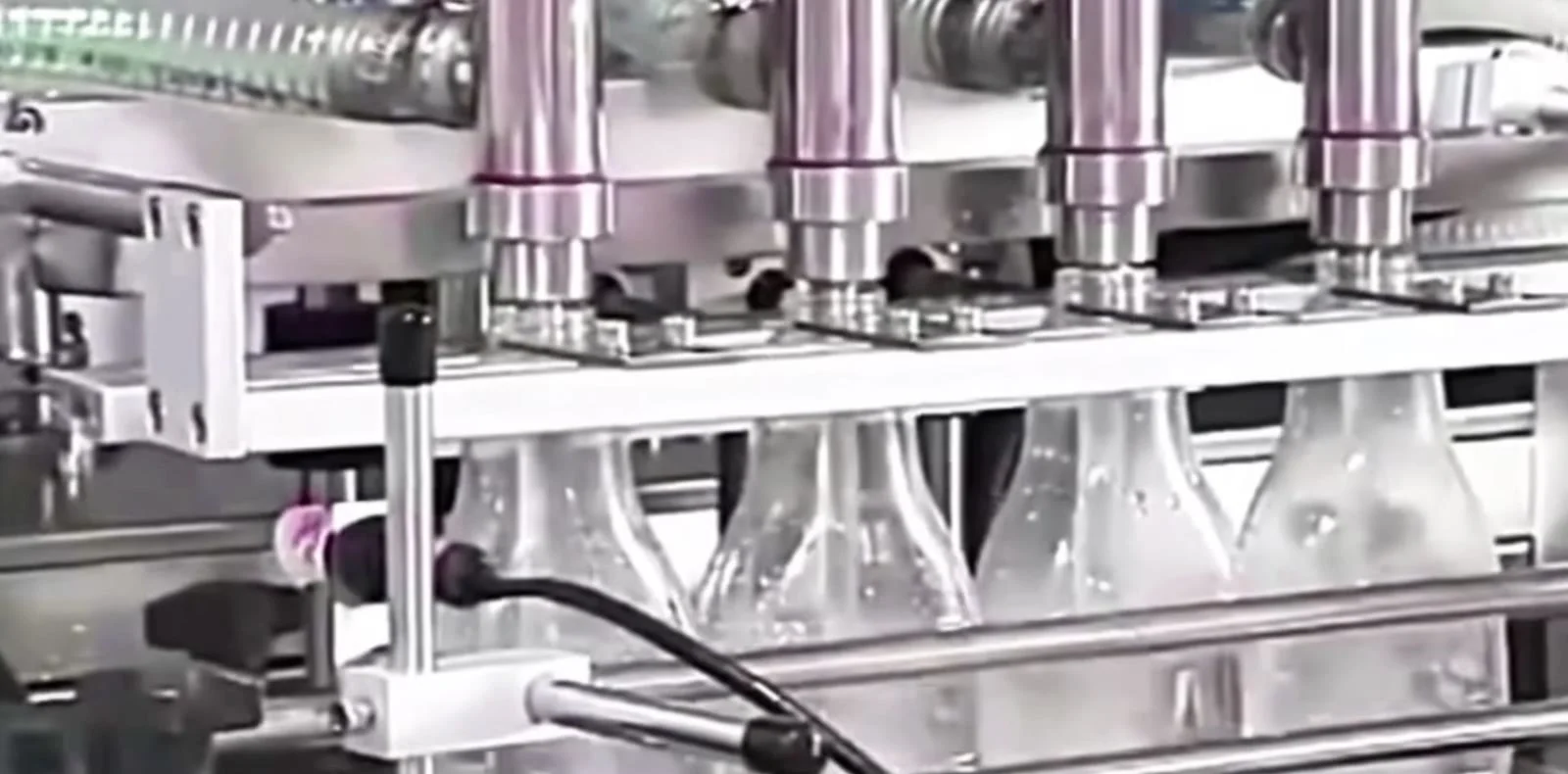
A jerrycan, drum or other large container can be filled using a measured volume, flow or weight route, but the filling principle is only one part of the system. The project must define whether containers are conveyed, manually positioned or palletised; how the opening is located; whether the nozzle top-fills or descends; and who controls loading, spills, closures and finished-pack removal.
Individual packs are indexed beneath one or more nozzles. The line may include cap handling, capping, coding and check inspection. Pack width, handle position, neck location and panel flexibility affect guides and stops.
An operator positions the pack or filling arm while the control system verifies permissives and performs the measured fill. The safe reach, nozzle support, spill control and removal method are critical parts of the design.
The load remains on a pallet or weigh platform while the nozzle is aligned to one or more openings. Define pallet tolerances, tare, vehicle access, load identification and how the completed load is released.
| Decision | Evidence required | Acceptance question |
|---|---|---|
| Measurement principle | Declared quantity, density/temperature behaviour, pack range and checking method | Does the delivered quantity remain within the agreed system under all production states? |
| Container presentation | Manual, conveyor, pallet, forklift or other handling route | Can every pack reach a repeatable safe fill position without unstable movement? |
| Nozzle access | Opening size, offset, bung or lid arrangement and pack height tolerance | Can the nozzle enter, fill and withdraw without contact, spill or trapped product? |
| Coarse and fine feed | Product flow, shut-off delay, hose expansion and target cycle | Can the system approach the target efficiently without overshoot? |
| Containment | Spill scenario, vapour/dust information, drainage and cleaning method | Are foreseeable releases controlled and recoverable within the site system? |
| Finished-pack handling | Closure, label, movement and accumulation process | Can a completed load leave without damaging the container or losing traceability? |
If dangerous substances may be present, the employer’s DSEAR assessment and any hazardous-area classification must be available before equipment selection is finalised. See the HSE DSEAR guidance and obtain competent application-specific advice.
The correct measurement method depends on the declared quantity, product properties, pack range and production process. Weigh filling measures mass directly and can suit drums or palletised containers; flow measurement can suit a stable liquid path; volumetric dosing may suit a defined displacement range. Tare, air, density, temperature and legal-use requirements must be reviewed.
Where goods are sold by declared quantity, the packer should confirm the checking system and any legal metrology requirements with a competent adviser.
For jerrycans, automatic filling may include conveyor presentation, neck location, filling, cap application and discharge. For drums or palletised packs, automation may instead control container identification, nozzle positioning, coarse/fine feed and acceptance while an operator or handling system manages the pallet. The required boundary should be defined in the URS.
Write the material-handling, dosing and operator responsibilities separately so no interface is assumed by both parties or by neither.
Bottom filling may be considered when free fall creates unacceptable foam, splash, vapour or static risk. The nozzle or lance must enter and withdraw without contacting the pack, trapping product or creating a cleaning hazard. The dutyholder’s product and DSEAR assessments determine the required controls for dangerous substances.
Compare top and bottom fill with representative product, the actual opening and the intended extraction or ventilation arrangement.
Large containers can have meaningful tare variation, and pallets, liners, closures or residual product can change the starting weight. A gravimetric process should define when and how tare is captured, what is included in the measured load and how an abnormal starting condition is handled.
The control system should prevent an accepted fill when the initial load is outside the agreed tare or pack-present condition.
Provide production containers across the intended range, including the least rigid example, cap or bung, liner and pallet arrangement. Drawings should show overall dimensions, opening position, handle or lifting points and tolerances. The project also needs the loading method and available operator or vehicle access.
For palletised packs, include the pallet itself and any stretch wrap, trays or spacers that affect access and load position.
Provide the product safety data, temperature, vapour or dust information, spill and exposure controls, zoning or DSEAR assessment where applicable, earthing/bonding requirements, load-handling method and intended operator tasks. The final risk assessment must cover the complete installed process, not only the dosing head.
General guidance cannot replace the employer’s site-specific risk assessment, hazardous-area classification or safe system of work.
Send the product, pack, handling and site information. Lancing can help define the dosing route and the interfaces that need a representative trial or site review.
May suit a stable pipe-fed liquid where the meter, hose, valve and nozzle can control the production product across the required pack sizes.
May suit packs that can be supported on a load cell or platform while tare, bulk flow and final cut-off are controlled.
Send the product, pack and output details that matter. We’ll compare the most practical dosing and line options for you.