Unit 5A Jefferson Way, Thame, Oxfordshire, OX9 3SZ

Search machine types, applications, buyer guidance and filling-line topics.

Compact integrated production

When is a monoblock filling and capping machine the right choice?

A monoblock combines filling and one or more closure-handling operations on a shared machine frame or closely integrated platform. It can reduce transfer distance and footprint, but the project succeeds only when the product path, bottle indexing, cap presentation, cleaning and format changeover are engineered as one system.

  • Specify product, bottle and closure together
  • Check cleaning and maintenance access
  • Accept the complete machine sequence, not isolated stations
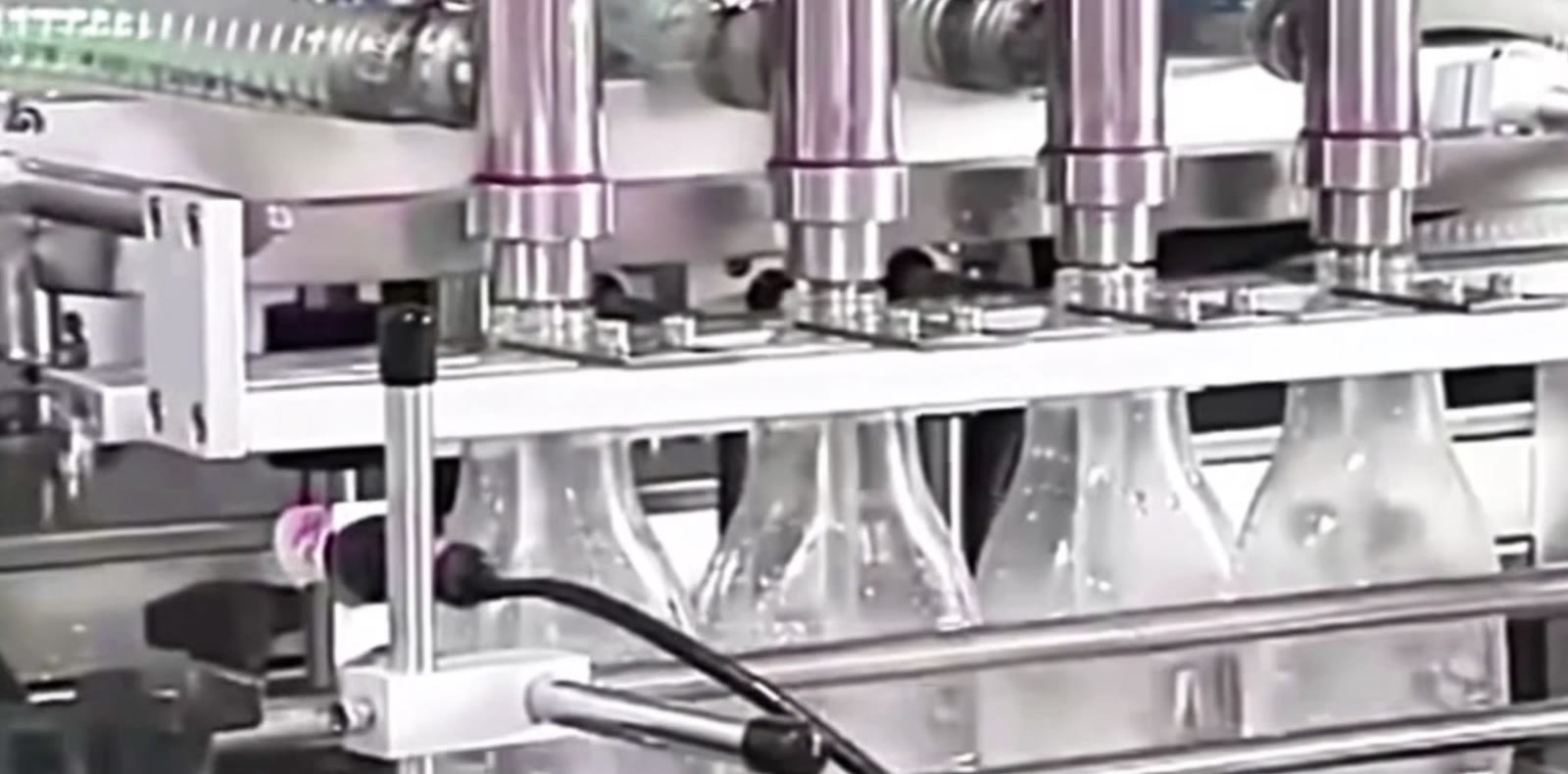
Automatic filling machine with bottles presented beneath filling nozzles
Machine selection should be verified with the real product, container and production sequence
Direct answer

Integrate the stations only when the complete pack sequence is understood

A monoblock can combine filling, plug or cap placement and closure securing in one compact system. The benefit is not simply a smaller footprint: it can keep containers under positive control between critical stations. The trade-off is that filling, cap handling, cleaning and format changeover become tightly linked.

The machine should therefore be specified from the complete product-and-pack matrix. A change to the bottle, cap or filling route can affect every station on the common pitch.

Integrated stations

Define what the monoblock must do at each index

StationProject decisionEvidence needed
Container infeed and indexingStarwheel, screw, puck or other handling method must stabilise every bottle.Bottle drawings, samples, centre of gravity and tolerance range.
FillingDosing method must suit product, dose, cleaning and nozzle opening.Product samples, fill range, temperature and acceptance method.
Plug or insert placementSmall components need reliable feed, orientation and seating.Production inserts, bowl-feed trial and reject definition.
Cap presentationCap feeder and track must deliver the closure without damage or inversion.Cap samples, liner, tamper band, dip tube and finish details.
Capping or securingTorque, press, crimp or roll operation must match the closure.Pack supplier limits and downstream seal or leak checks.
Outfeed and inspectionThe machine needs a defined response to missing, loose or rejected components.Inspection criteria, reject method and downstream capacity.
Layout choice

Compare compact integration with separate linked machines

DecisionMonoblockSeparate machines
FootprintCan be compact because transfer is integrated.Usually needs more conveyor length and guarding interfaces.
Container controlPositive indexed handling can protect small or unstable packs.Conveyor transfer and accumulation provide more decoupling.
ChangeoverSeveral stations share one format and pitch.Stations may be adjusted independently.
Cleaning accessCompact build can make access more concentrated.Separate stations may be easier to isolate or move around.
Future expansionMajor station changes can affect the complete machine.Individual machines can sometimes be replaced or upgraded separately.
Fault recoveryOne station fault normally stops the complete indexed cycle.Buffers may allow short independent recovery between machines.
Format control

One new bottle can change several tooling sets

A format change can involve infeed guides, timing screw or starwheel, nests or pucks, fill-nozzle height, plug-placement tooling, cap track, capping head and outfeed guides. The quotation should distinguish shared adjustments from dedicated format parts and should state which bottle and closure combinations are included.

Changeover evidence

  • List every bottle, insert and cap combination
  • Identify dedicated and adjustable tooling
  • Record recipe and mechanical settings
  • Demonstrate first-off inspection after change
  • Time safe changeover and return to production

Cleaning must remain practical

Compact machinery should not trap the product path behind closure stations or guarding. Review safe isolation, nozzle access, product recovery, removable parts and how cap-feed equipment is protected during washdown or cleaning.

FAT and SAT

Accept the connected sequence and its recovery states

  • No bottle/no fill and no cap/no secure behaviour
  • Missing or mis-presented plug and cap response
  • Filling accuracy under normal cap-feeder operation
  • Bottle jam, downstream blockage and restart
  • Format change and first-off release
  • Cleaning, safe access and maintenance demonstration

Use the FAT and SAT guide to define observable evidence for the full machine rather than accepting each station in isolation.

Machinery-safety boundary

Integrated motion needs one coordinated risk assessment

A monoblock combines several mechanisms and access points. Guarding, interlocks, safe isolation, stored energy, manual loading and maintenance access should be assessed across the complete machine. General UK machinery-safety guidance is available from HSE; the final solution requires an application-specific assessment.

Buyer questions

Common questions about monoblock filling and capping

What is a monoblock filling and capping machine?

A monoblock filling and capping machine integrates container indexing, filling and closure application on one compact machine platform. Depending on the project it may also include plug insertion, cap feeding, crimping or labelling. The exact stations must be defined around the real product, bottle and closure.

How is a monoblock different from a conventional filling line?

A conventional line uses separate machines linked by conveyors and accumulation, while a monoblock places several operations within one coordinated machine. A monoblock can reduce transfer distance and footprint, but separate machines may offer easier independent access, buffering, future expansion or mixed-format flexibility.

Which products are suitable for a monoblock filler capper?

Product suitability depends on the filling method installed in the monoblock. Peristaltic, piston, pump, flowmeter, gravity and other routes can be integrated where the product, dose and cleaning method allow. The product should not be selected from the word monoblock alone; the dosing module remains the core technical decision.

Which closures can a monoblock apply?

A monoblock can be designed for selected screw caps, press-on closures, plugs, droppers, pumps, sprays, crimp closures or other formats, but each closure needs a verified feed, orientation, placement and securing method. Long dip tubes, tamper bands and decorative finishes can materially change the machinery scope.

Are monoblocks easy to change over?

Changeover can be efficient when the format range is designed into guides, starwheels, nests, filling tooling, cap tracks and recipes. It can also be more involved than a simple linear line because several stations share one pitch and container-control system. The full changeover should be timed and demonstrated.

What information is needed to specify a monoblock?

Provide production product, dose range, every bottle and closure format, cap-feed requirement, target sustained output, cleaning method, operator loading, available space, utilities, upstream and downstream equipment, guarding expectations and acceptance tests. Physical bottle and closure samples are essential before tooling is finalised.
Before quotation

Information Lancing needs to confirm the filling route

  • Production product and difficult normal condition
  • Minimum, maximum and common fill quantity
  • Container, opening, closure and format range
  • Sustained output and shift pattern
  • Product feed, cleaning and utilities
  • Upstream, downstream and acceptance requirements

Send product, pack and production evidence

Lancing can compare practical machine routes, identify what can be quoted from the available information and define where samples or a representative trial are needed.

Choose with confidence

Get a filling-machine shortlist built around your product.

Send the product, pack and output details that matter. We’ll compare the most practical dosing and line options for you.

Call an expert