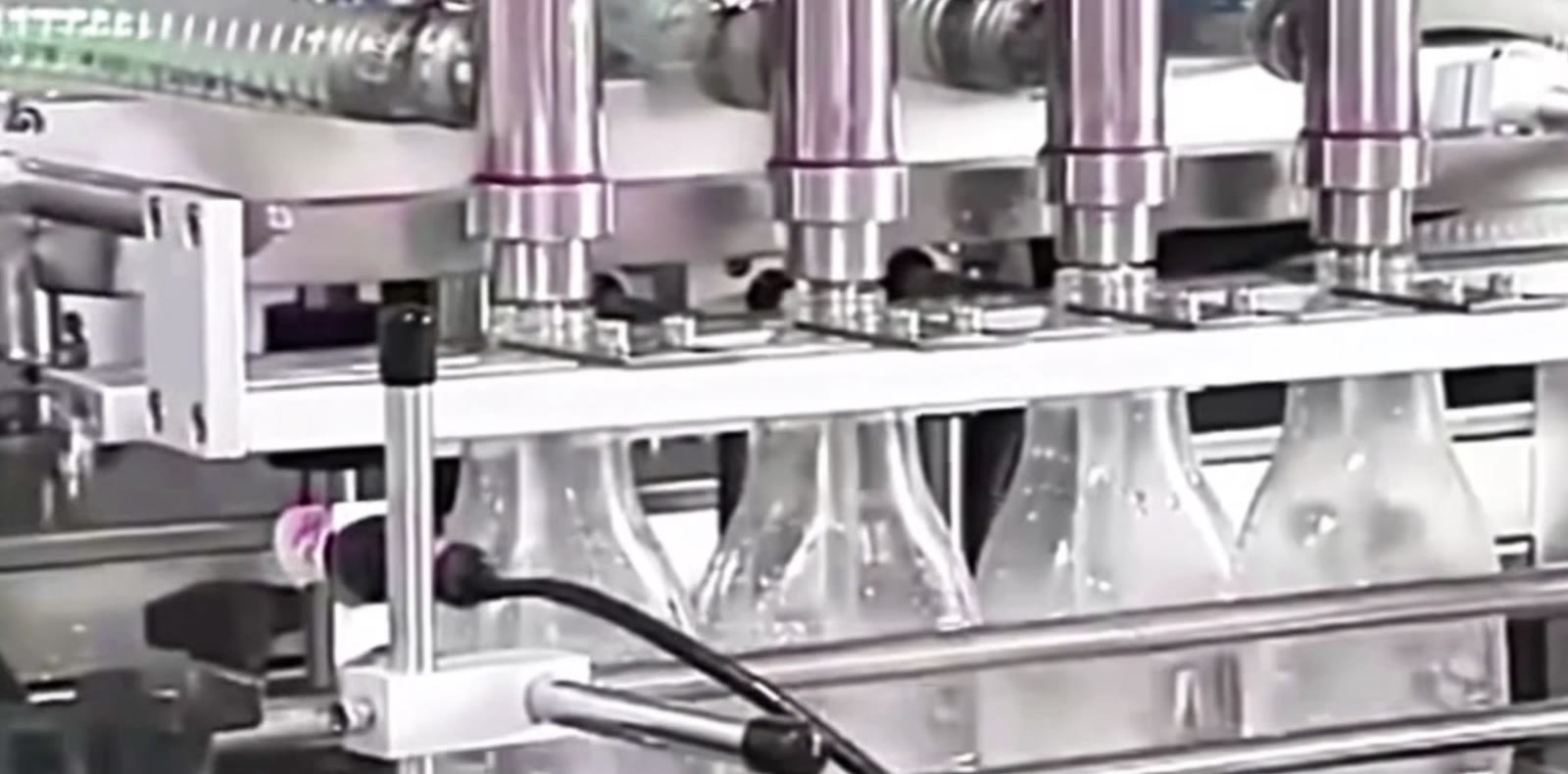
Does a rotary filling machine always run faster than an inline filler?
No. Rotary layouts can support continuous container movement and many stations, but sustained output still depends on fill time, product feed, container transfer, closure handling, inspection, rejects and downstream availability. An inline tracking or multi-head system may be more suitable for some products and outputs. Headline machine rates are not directly comparable without common test conditions.
Compare the complete line under normal running, refill, blockage and restart states. The slowest stable interface often determines useful output.
Which layout is better for frequent container changeovers?
The better layout is the one with a controlled, repeatable format-change method for the actual container family. Inline machines may use adjustable guides, stops and nozzle spacing, while rotary machines may rely on dedicated screws, stars, pockets or turrets. Neither is automatically quicker. Tool weight, identification, storage, access, settings and first-off verification all affect changeover time.
Witness a change between representative formats and record both hands-on work and the time needed to release the first acceptable container.
How do fragile or unstable containers affect the choice?
Fragile, lightweight or narrow containers need controlled support, acceleration and transfer. Rotary systems can positively locate containers in pockets, while inline systems can use guides, timing screws, clamps, neck handling or indexing devices. The correct arrangement depends on empty and filled stability, surface finish, dimensional tolerance, opening position and how the pack leaves the filler.
Supply real containers from normal production, including known tolerance extremes, and observe scuffing, deformation, tipping and missed transfers during trials.
How should footprint and maintenance access be compared?
Compare the full guarded installation envelope, not only the machine base. Include operator positions, product supply, cleaning access, doors, electrical panels, change-part movement, maintenance withdrawal space, conveyors and safe routes around the line. A rotary machine may shorten the product path but still require access around the carousel; an inline machine may be longer but easier to approach from defined sides.
Review a scaled layout with doors and service zones shown open before fixing the site position.
Which layout is easier to integrate with an existing capping or labelling line?
Integration depends on container pitch, conveyor height, speed control, accumulation, transfer geometry and machine-state signals. An inline filler may connect directly to an existing conveyor, while a rotary filler needs controlled infeed and discharge transfers. Either can work when the interfaces are designed rather than assumed.
Provide the existing line layout, conveyor dimensions, speeds, controls, container flow direction and available accumulation. Define ownership of every mechanical, electrical and control interface.
What should a layout comparison include before order?
A layout comparison should show product and container flow, operator and maintenance access, guarding, utilities, cleaning routes, change-part storage, accumulation, rejection, line controls and recovery from foreseeable stops. It should also identify which formats require dedicated parts and where samples will be inspected during acceptance testing.
Use the same product, container and output assumptions for both options. A layout is not complete until the customer can see how the line is operated, cleaned, maintained and restarted.