Automatic versus semi-automatic filling machines: choose around the production task
The best automation level is the one that controls the real bottleneck without making short runs, cleaning or format changes unnecessarily difficult.
- Labour and handling
- Sustained output
- Changeover and integration
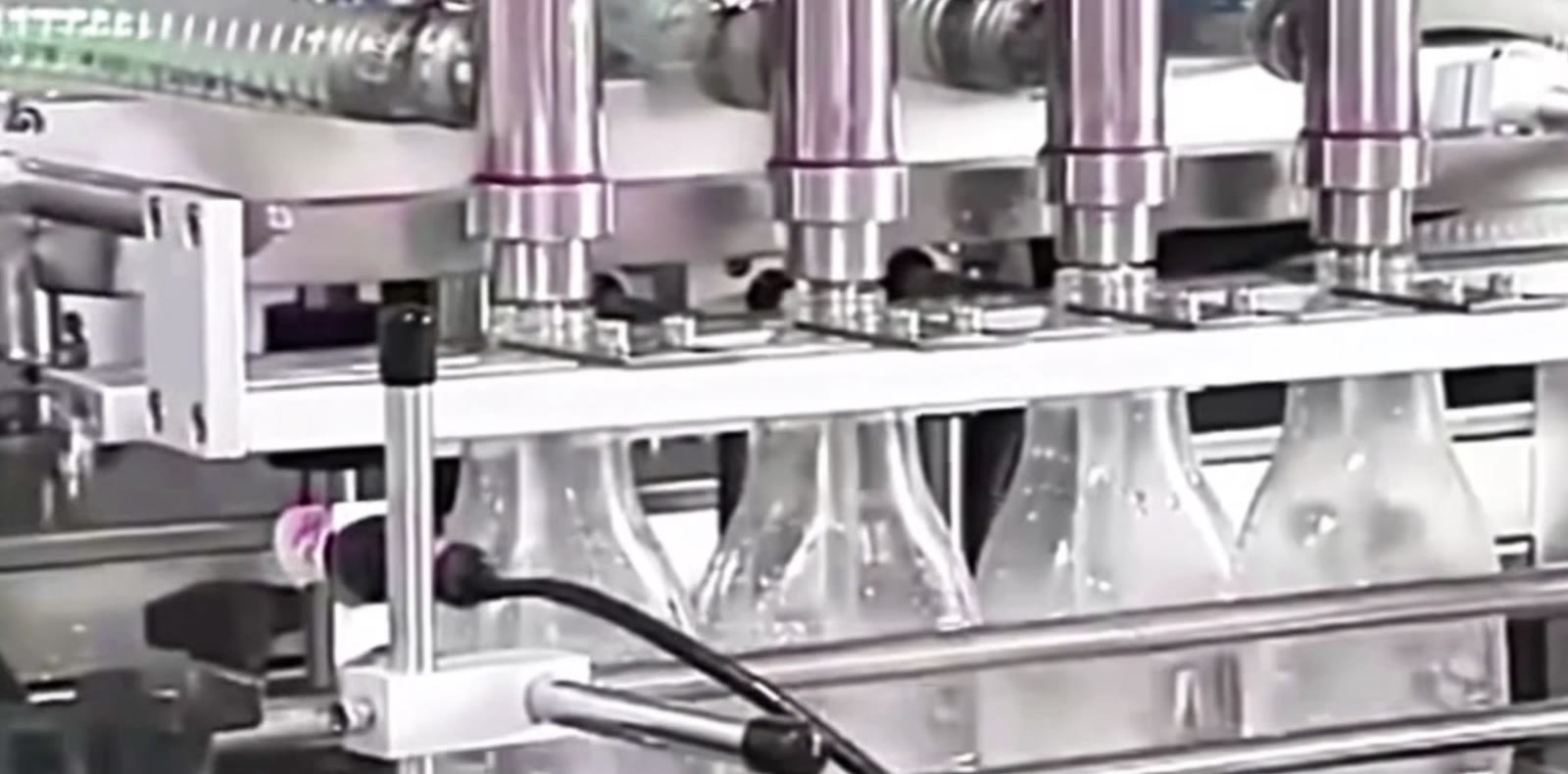
Automatic and semi-automatic filling are different production systems
The dosing principle may be similar, but responsibility for pack presentation, cycle initiation, removal, fault response and line coordination changes substantially.
| Decision area | Semi-automatic filling | Automatic filling |
|---|---|---|
| Container presentation | An operator usually places, holds or positions each pack. | A conveyor, indexing device or handling system presents packs in sequence. |
| Cycle control | The operator starts each dose and may judge pack position. | Sensors and controls permit filling only when the required container state is confirmed. |
| Labour use | Direct operator involvement remains part of every cycle. | Operators supervise, replenish, inspect and respond rather than present every pack. |
| Output behaviour | Can suit short campaigns; output depends strongly on operator rhythm and pack handling. | Designed for repeatable line flow, but sustainable rate depends on all connected stations. |
| Format change | Often simpler when packs are manually presented. | May require guides, timing, recipes, change parts and validation of each format. |
| Integration | May feed a separate capping or labelling task manually. | Can exchange permissives, faults, speeds and pack states with upstream and downstream equipment. |
| Guarding and access | Scope depends on movement and risk assessment. | Automatic motion, conveyors and interfaces require a complete guarded operating concept. |
| Data and recipes | Settings may be operator-led and locally recorded. | Recipe control, user permissions, counters, fault history and line states may be specified. |
Do not compare purchase price alone
Compare the complete task: pack loading, product replenishment, filling, wiping or drip control, capping, labelling, inspection, packing, cleaning and format change. An automatic filler that still needs constant manual correction may not remove the intended labour or quality constraint.
Conversely, a semi-automatic machine can be the more productive choice when runs are small and varied, because it avoids a long automatic changeover for a short campaign.
Calculate the real production window
Record available shift time, planned cleaning, format changes, breaks, replenishment and expected minor stops. Use the remaining run time to set the required sustainable rate. The output calculator can structure that estimate.
Choose automation by answering six operational questions
A clear answer to each question is more useful than labelling the project “automatic” before the line task is defined.
- How many production hours must the format run? A sustained long campaign creates a different automation case from several short daily batches.
- Where is labour currently used? Separate dose initiation from container loading, closure handling, inspection, case packing and cleaning.
- How stable are the containers? Light, tall, flexible or dimensionally variable packs may need greater handling control than the filler itself.
- How often do product and pack formats change? Include cleaning, parts, guide adjustment, recipe selection and first-off checks.
- Which stations must work as one line? Define infeed, filling, capping, labelling, coding, inspection, rejection and accumulation interfaces.
- What future volume or formats are credible? Specify realistic expansion provisions rather than paying for undefined capacity.
Use a staged route when the business case is not yet proven
A staged project may begin with controlled semi-automatic dosing and documented product/pack trials, then progress to automatic handling when demand and format stability justify it. The staged route only works if future requirements are discussed early: product feed, nozzle actuation, controls, guarding and interfaces may otherwise require replacement rather than upgrade.
Compare automation using your actual production task
Send the current method, batch pattern, packs, fill range, staffing and target output. Lancing can compare semi-automatic, compact automatic and integrated-line routes without assuming the most complex option is automatically the best.
Automatic versus semi-automatic filling FAQs
When does semi-automatic filling remain the better choice?
Semi-automatic equipment can be appropriate where batches are short, formats change frequently, operators already handle packs, capital scope must be controlled or automatic container presentation would be disproportionate.
What normally triggers a move to automatic filling?
Typical triggers include sustained demand, repetitive manual handling, the need for consistent container presentation, integration with capping or labelling, controlled recipe operation and a requirement to record line states.
Does automatic always mean faster?
Not necessarily. Sustainable output depends on product feed, fill time, container handling, closure supply, downstream equipment, changeover and stoppage recovery. Automation can improve repeatability and labour use even when the nominal fill cycle is unchanged.
Can a semi-automatic filler be upgraded into a fully automatic line later?
Sometimes, but only when controls, product feed, guarding, nozzle actuation and container interfaces were designed for integration. Treat future automation as a defined engineering requirement, not an assumed add-on.